
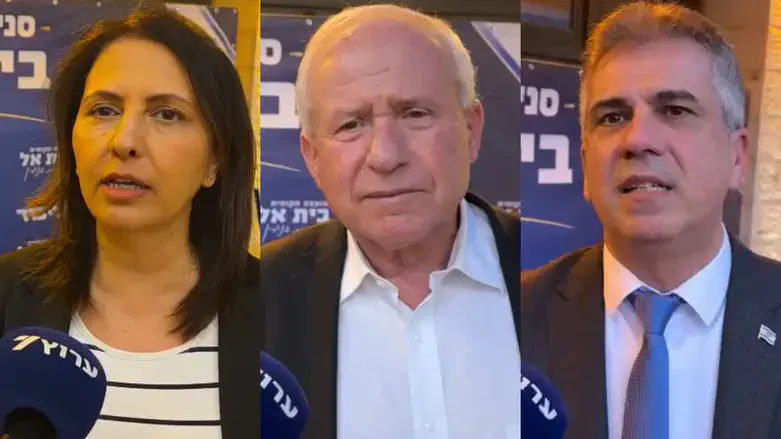
Three cabinet members-Ministers Avi Dichter, Eli Cohen, and Gila Gamliel-addressed the emerging details of the agreement during a Likud conference held in Beit El.
In an interview with Arutz Sheva, the ministers clarified that this represents a strategic shift carried out in full coordination with the Trump administration, but one that does not include a withdrawal from areas captured in southern Lebanon.
Minister Gamliel noted that President Trump’s invitation to Prime Minister Benjamin Netanyahu and the Prime Minister of Lebanon to Washington is intended to promote long-term peace, alongside a firm demand to disarm Hezbollah. “A distinction must be made between the Lebanese government and people, and the hostile takeover of Lebanon by Iran and Hezbollah," she said.
She added: “We will remain up to the Litani line and safeguard the borders, with the goal that this boundary will eventually become an economic border between the two countries-and that Hezbollah will disappear from the area."
Responding to opposition criticism about the “abandonment of the north," Gamliel dismissed the claims: “We are doing what should have been done long ago. Under Netanyahu’s leadership and with extraordinary cooperation with Trump, we are completely reshaping the Middle East."
Minister Avi Dichter clarified that the ceasefire decision did not surprise the political leadership and emphasized the strategic importance of coordination with the White House, especially under the current administration.
“You have to understand that you are entering into a partnership with the United States and with the President of the United States," he said. “There are many aspects that are better than what we initially wanted or expected."
However, he acknowledged the complexities and compromises involved: “There are some things we like less, but overall we understand the direction."
Minister Eli Cohen took a more hawkish line regarding implementation on the ground. “A ten-day ceasefire during which we will see where things are heading," he said. He emphasized Israel’s achievement in separating the Lebanese arena from the Iranian one: “It was very important for us to create a distinction between Iran and Lebanon, both in actions and in timelines."
He expressed skepticism about the Lebanese government’s ability to enforce its authority: “I doubt whether the Lebanese government or its president will be able to do anything against Hezbollah. And if they don’t do the job-we will. We are committed to disarming Hezbollah."
Regarding residents of northern Israel, Cohen made clear that the IDF would not withdraw from its positions: “We will remain in all the areas we have taken. This strip will, at this stage, prevent the anti-tank threat and infiltration threats. In my view, operations should continue in the future up to the Litani-and even beyond if necessary."