

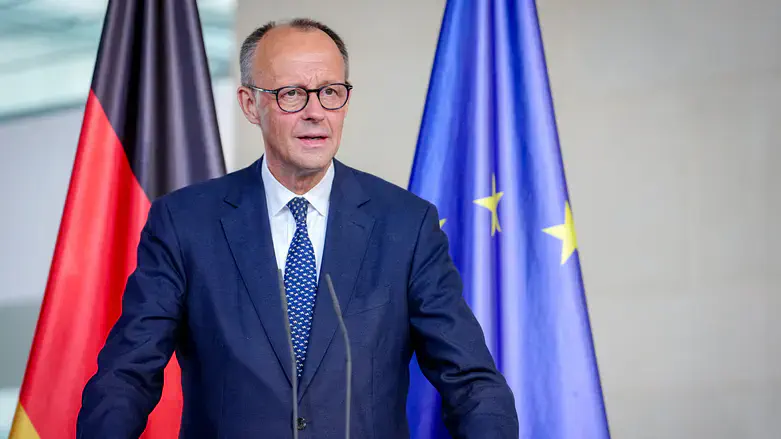
German Chancellor Friedrich Merz on Friday expressed skepticism that the United States and Israel had a clear strategy to end the war in Iran, Reuters reported.
He further said Germany would in principle be ready to help stabilize the region after the end of hostilities.
"I'm just not convinced that what's happening right now - what Israel and America are doing - will actually lead to success," Merz said at a conference hosted by the FAZ newspaper.
Berlin is involved in diplomatic efforts to find solutions, whether via talks with Gulf states or within the G7, with Washington showing some effort to find common ground, according to the chancellor.
"We are trying to influence Israel, with limited success, I admit," he added.
Since the US and Israel attacked Iran on February 28, Iran has launched strikes against Israel, US bases and Gulf states, as well as effectively blocking Middle East fuel exports via the Strait of Hormuz.
Several European nations have rejected US President Donald Trump’s calls to participate in a mission aimed at reopening the Strait of Hormuz, a critical transit point for oil, gas, and other goods now largely blocked by Iran. European leaders have expressed their unwillingness to deploy forces into a conflict they did not initiate, despite Trump’s warnings that such reluctance could harm NATO alliances.
Trump, in response, called on "other nations whose economy depend on the strait, far more than ours. We get less than one percent of oil from the Strait. Many of the Europeans get quite a bit. So we want them to come and help us with the strait."
Merz said on Friday he had sought in a recent phone call with Trump to explain that this is not NATO's war, adding, "I think he understood this."
Germany could in future help to secure the Strait of Hormuz, for example with mine clearance, provided there were an international mandate and approval from the German parliament.
But the chancellor stressed that this was a long way off and not an option as long as the war continued.
(Arutz Sheva-Israel National News' North American desk is keeping you updated until the start of Shabbat in New York. The time posted automatically on all Israel National News articles, however, is Israeli time.)