

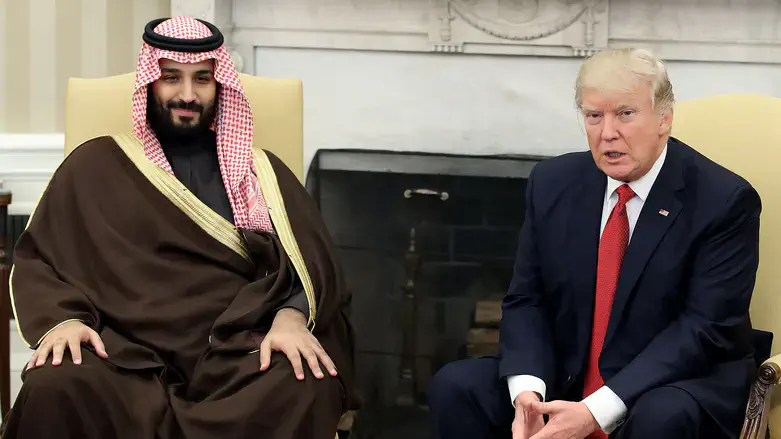
Saudi Arabia’s de facto leader, Crown Prince Mohammed bin Salman, has urged US President Donald Trump to continue the military campaign against Iran, describing the conflict as a rare opportunity to reshape the Middle East, according to a report by The New York Times.
The report, citing individuals briefed on discussions with American officials, stated that the Saudi leader conveyed in recent conversations that the effort should continue until Iran’s hard-line government is dismantled. He reportedly argued that Iran poses a long-term threat to Gulf states that cannot be resolved without removing the current regime.
According to The New York Times, the Saudi position differs in part from Israeli assessments. While Prime Minister Benjamin Netanyahu also views Iran as a significant threat, some analysts believe Israel could view a weakened Iran consumed by internal instability as sufficient. Saudi Arabia, however, is said to see such a scenario as a direct security risk.
Despite these reported discussions, Saudi officials denied that the kingdom is advocating for prolonging the war. In an official statement, the government said it supports a peaceful resolution and remains in close contact with the US administration. It emphasized that its primary concern is defending against ongoing attacks targeting civilians and infrastructure.
The report noted growing concern among US and Saudi officials that a prolonged conflict could result in continued Iranian strikes on energy infrastructure and draw the United States into an extended war. Iranian retaliation has already disrupted oil markets and affected regional stability.
President Trump has issued mixed signals publicly, at times suggesting the possibility of de-escalation while also indicating that military operations could intensify. He recently stated that there had been “productive conversations" toward resolving hostilities, though Iran denied that negotiations were taking place.
According to the report, the Saudi crown prince has also raised the possibility of targeting Iran’s energy infrastructure and has expressed support for more extensive military measures. Discussions reportedly included potential operations involving key oil facilities.
The economic and security implications of the conflict are significant for Saudi Arabia. Iranian attacks have impacted vital shipping routes, including the Strait of Hormuz, through which much of the region’s oil exports pass. Alternative routes have also faced threats.
Officials and analysts cited in the report said Saudi leaders are concerned that ending the conflict without significantly weakening Iran could leave the region vulnerable to continued attacks. At the same time, a prolonged war could strain Saudi Arabia’s economy and complicate long-term development goals.
A week earlier, Reuters reported that Gulf Arab states were warning against ending the war in a manner that would leave Iran capable of threatening regional energy infrastructure. Sources told Reuters that there is growing concern across the Gulf that Iran’s actions have demonstrated its ability to target key facilities and disrupt shipping routes.
The Reuters report also indicated that the US has encouraged regional governments to show support for the joint US-Israeli operation, as President Trump seeks broader backing for the campaign. Gulf sources cited increased anxiety over Iran’s missile and drone capabilities and the potential impact on oil exports and economic stability.
According to those sources, Gulf leaders are weighing the risks of escalation against the dangers of leaving Iran with significant military capacity. While coordination among regional states remains limited, there is an increasing emphasis on defensive cooperation.
Both reports highlight the strategic and economic stakes of the ongoing conflict, as regional and international actors assess the potential outcomes and risks associated with its continuation or resolution.