
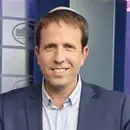
Yeara Shir and her family moved to the northern city of Kiryat Shmona about six months ago, a decision she says was directly influenced by the war and the challenges facing Israel’s border communities. Speaking in an interview with Arutz Sheva - Israel National News, she described the family’s move from Jerusalem and their experience settling in the city during a difficult security period.
Shir explained that the family had lived in Jerusalem for around twenty years before deciding to relocate following the October 7th massacre.
“We felt deep inside that we had to make a change," she said. “We could not remain indifferent to the challenges facing Israel’s borders, and from that point the path to Kiryat Shmona was very short."
Although the decision was made early in the war, the family only moved once the security situation in northern Israel made it possible. “It is not our role to defend against security threats," she said. “The army and security forces have their responsibilities, and civilians have theirs. Our role is to live here and help make this region grow into a good place - a place where it’s pleasant to raise children, build a family, work, and earn a living."
Shir acknowledged that a single family cannot transform a city, but believes change will come if many more people choose to move north. “One family joins, then another, and eventually hundreds or even thousands," she said. “That’s how you create a city and a region that offers residents not only ideology and meaning, but also a truly high quality of life."
She also described the warm welcome her family received from local residents. According to Shir, about 70 percent of Kiryat Shmona’s residents have returned to the city following the war. “We didn’t live here before the war, so we can’t compare," she said. “But we were received incredibly warmly - both by the religious community we joined and by other residents in the city. It was a joyful and moving reception that we did not take for granted. There is a very strong sense of attachment to this place. Many veteran residents who love the city worry about its future and whether it will be able to make the leap forward it needs - both in terms of security and in social and economic development. About seventy percent chose to come back. That is not something to take for granted. People could have decided not to return, but they did, and there is a lot of strength and hope in that choice."
Despite the current period of relative quiet, tensions with Hezbollah remain, with occasional rocket fire continuing along the northern border. "For months things were simmering on low heat. When it happens, it is frightening like any war. There is a lot of uncertainty. Even if it’s not like the center of the country, it’s still not simple to live next to a war. There are background sounds of conflict and sirens. The time to reach shelters is almost zero."
Shir also noted that many longtime residents carry emotional scars from decades of rocket attacks on the city. “People here have lived with Katyusha rockets and missiles for decades, and many still carry fears and anxieties from those years," she said. “We are new here, so we don’t carry that same burden. There are people here who have carried the responsibility of this border on their shoulders for seventy years," she said. “It’s a security responsibility, but also social, economic and communal. I feel I’m simply joining them as a partner in carrying that burden."
“Kiryat Shmona is looking for families, and also singles, who want to live here," she said. “People who will join the education system, work in the region, and become part of the communities here. There are wonderful communities in this city. There is a long way to go here, but it is also rewarding. In many ways the quality of life here is very high - often even higher than in the center of the country."