

US President Donald Trump, who has been escalating his rhetoric against Iran, on Friday expressed his belief that regime change in Iran “would be the best thing that could happen."
However, sources familiar with the administration's planning revealed to CNN on Monday that the US still lacks a clear strategy for what would follow the removal of Iran's government. Secretary of State Marco Rubio emphasized this uncertainty during a congressional hearing last month, stating that “no one knows" who would take over if the regime were to collapse, the report noted.
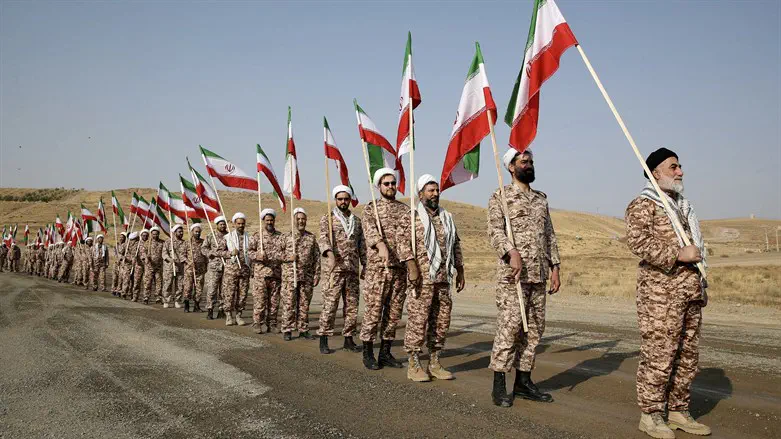
CNN also reported that the US intelligence community has warned that the likely alternative leadership could be even more problematic. If the Iranian regime fell, the hard-line Islamic Revolutionary Guard Corps (IRGC) would likely seize control, at least temporarily, according to sources with knowledge of the situation.
“The IRGC is definitely prominent and functions above the standard military bureaucracy, but it is hard to predict exactly what would happen in a regime collapse scenario," said one source familiar with recent US intelligence reports.
The Trump administration’s understanding of the IRGC's internal hierarchy remains limited following the elimination of Iran's most powerful military commander, Maj. Gen. Qasem Soleimani, during Trump’s first term. In contrast, US intelligence had a much clearer understanding of Venezuela's power structure before its capture of President Nicolás Maduro.
Several sources have suggested that there was a critical window of opportunity for military strikes several weeks ago when Iran's protests were at their height. At that time, US military action could have potentially tipped the balance in favor of the opposition, providing a momentum boost for Iranians seeking to overthrow their government. However, these sources now question whether Trump “missed the moment" and whether military action now would be as effective.
The report comes ahead of Tuesday’s round of talks in Geneva between the US and Iran. Commenting on those talks on Monday, Trump indicated he will be indirectly involved in them and expressed hope the Islamic Republic acts reasonably.
“I'll be involved in those talks indirectly, and they'll be very important. We'll see what can happen. But typically, Iran's a very tough negotiator," said the President.
“I would say they're bad negotiators, because we could have had a deal instead of sending the B-2s in to knock out their nuclear potential, and we had to send the B-2s. I hope they're going to be more reasonable. They want to make a deal," he continued.
Responding to a reporter who asked whether he thinks a deal is next to impossible, Trump stated, “No, no. I think they want to make a deal.I don't think they want the consequences of not making a deal. They want to make a deal."