

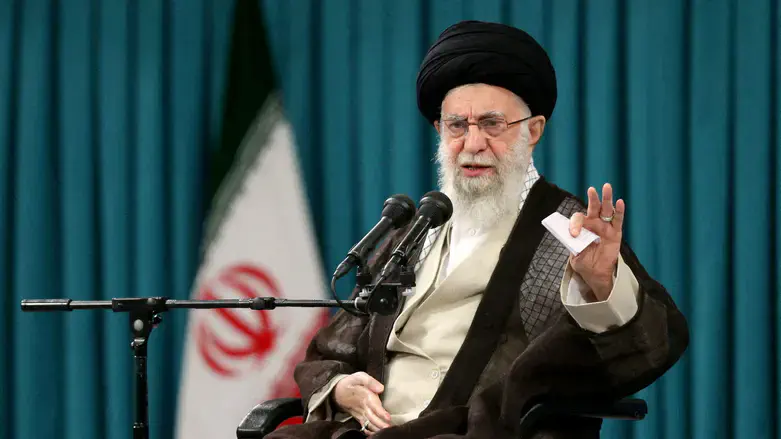
Iran’s Supreme Leader Ayatollah Ali Khamenei on Monday called for national unity as the United States strengthens its military presence in the Gulf region.
In a post on social media, Khamenei urged his nation to stand firm in the face of external threats, saying, “The enemy must be driven to despair. The enemy’s despair comes through [our] unity, strength of thought and determination, and steadfastness in confronting the enemy’s temptations. These are what build national power."
Khamenei’s comments came ahead of the 47th anniversary of the Islamic Revolution, which brought the mullahs to power in Iran. He criticized foreign powers for their ongoing efforts to restore the pre-revolutionary monarchy, specifically referring to the current aspirations of Crown Prince Reza Pahlavi.
“The national power is less about missiles and aircraft and more about the will and steadfastness of the people. Show it again and frustrate the enemy," Khamenei said, emphasizing that the strength of the Iranian people, not just military assets, is key to resisting external pressure and interference.
US President Donald Trump has called on Iran to sign a deal related to its nuclear program, but has also beefed up the American military presence in the Middle East.
Trump told NBC News last week that Khamenei should “be very worried" despite the talks with the US on a potential deal.
“I would say he should be very worried, yeah. He should be. As you know, they're negotiating with us," Trump said.
He was asked why there is a need for a deal if Iran’s nuclear program has been obliterated and whether Iran is trying to restart their nuclear program and replied, “Well, I heard that they are, and if they do, and I let them know, if they do, we're going to send them right back and do their job again."
“They tried to go back to the site. They weren't even able to get near it. There was total obliteration. But they were thinking about starting a new site in a different part of the country. We found out about it. I said, ‘You do that, we're going to do very bad things to you,’" said Trump.
The US and Iran held a round of indirect nuclear talks in Oman this past Friday. The Wall Street Journal reported following Friday’s talks that Iran rejected US calls to halt its uranium enrichment, although both sides agreed to continue negotiations in order to prevent an escalation.
Iran’s Foreign Minister Abbas Araghchi stated on Sunday that indirect nuclear negotiations with the United States will proceed if Tehran concludes that Washington possesses the “necessary seriousness" to reach a negotiated resolution.
He pointed to issues within the content of the talks, such as what he described as “excessive and unrealistic" US demands and unreasonable claims, as the true obstacles to progress. Araghchi said that if the US demonstrates a respectful and fair approach based on mutual interests, an agreement would be possible.