

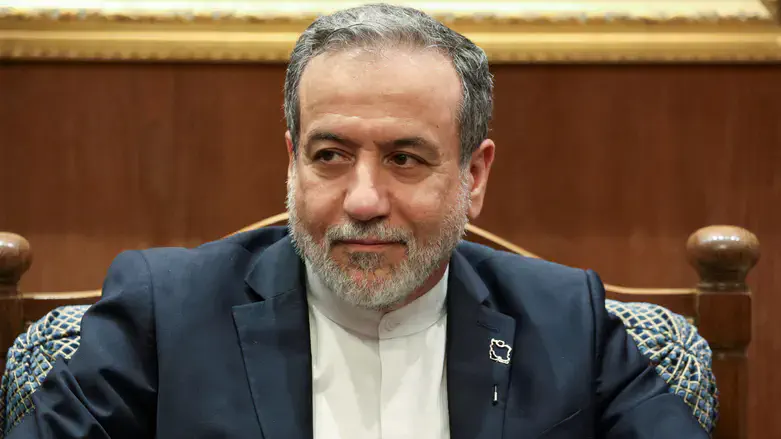
Iran’s Foreign Minister Abbas Araghchi stated on Sunday that indirect nuclear negotiations with the United States will proceed if Tehran concludes that Washington possesses the “necessary seriousness" to reach a negotiated resolution.
Speaking at a press conference in Tehran and quoted by the Xinhua news agency, Araghchi elaborated on Friday’s indirect talks between Iranian and US delegations held in Muscat, Oman.
He noted that while there are signs the United States is serious about reaching a deal, there are also indications that cast doubt on its determination. He cited the continuation of sanctions and military movements in the West Asia region as causes for concern, questioning the extent of US readiness and commitment.
Iran will continue to monitor and assess all these indicators, Araghchi said, emphasizing that indirect dialogue does not stand in the way of achieving an agreement.
However, he pointed to issues within the content of the talks, such as what he described as “excessive and unrealistic" US demands and unreasonable claims, as the true obstacles to progress. Araghchi said that if the US demonstrates a respectful and fair approach based on mutual interests, an agreement would be possible.
He reaffirmed Iran’s position that it will not renounce its right to develop and utilize peaceful nuclear energy, including uranium enrichment. He stated that success in the negotiations will depend on the other side taking this matter seriously.
Araghchi also made clear that Iran’s missile program has never been and will not be discussed in the talks with the United States, affirming that the negotiations will remain focused solely on the nuclear issue.
His comments are in line with ones he made on Saturday, when he said he hopes talks with the United States will resume soon, while reiterating Tehran’s red lines and warning that any American attack on Iranian territory would be met with a military response.
In excerpts from an interview with Al Jazeera published on his official Telegram channel, Araghchi said Iran’s missile program was “never negotiable" during Friday’s round of talks in Oman. He stressed that the issue relates to a “defense issue" and is not open to discussion.
The Wall Street Journal reported following Friday’s talks that Iran rejected US calls to halt its uranium enrichment, although both sides agreed to continue negotiations in order to prevent an escalation.
US Vice President JD Vance said last week that Trump would “keep his options open" on Iran and could ultimately use military force should diplomacy fail.
Speaking to journalist Megyn Kelly, Vance stressed, "Iran can't have a nuclear weapon. That is the stated policy goal of the president of the United States. It's so funny. Sometimes you have people who are saying, 'Well, the president's too belligerent.' And then sometimes you have people who say, 'Well, the president, he's talking about diplomacy and he's talking about negotiating with the Iranians. We shouldn't negotiate. We should just bomb them.'"