

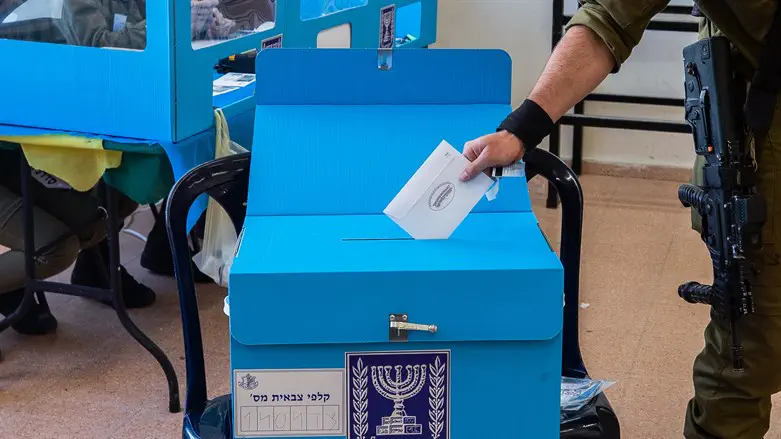
The upcoming Israeli legislative elections for the 26th Knesset, scheduled no later than October 27, 2026, are shaping up to be a pivotal contest amid ongoing political turbulence, the aftermath of the Gaza war, security concerns, and deep societal divisions. While the official date remains in late October, many analysts and reports indicate a strong likelihood of earlier elections, driven by coalition strains over the state budget, haredi draft exemptions, and other pressures that could force dissolution by spring or summer.
Israel's proportional representation system requires parties to surpass a 3.25% electoral threshold to win seats in the 120-member Knesset. Current polls show a fragmented landscape with no clear majority for any bloc, potentially returning to the deadlock seen in past cycles. Prime Minister Benjamin Netanyahu's right-wing coalition, currently holding power, faces erosion but remains competitive, while opposition forces struggle with internal divisions and a widespread reluctance among Zionist parties to rely on Arab support for government formation.
The effects of the war have brought forward several new parties calling to replace the parties that led to the October 7th massacre. Several existing parties have begun reshaping themselves, merging or adding members as the elections approach in an attempt to maintain their seats. With the next election approaching, who will be the key players to watch as Israel heads to the polls?
Returning Parties
Several major parties are expected to return with varying degrees of strength. Likud, led by Prime Minister Netanyahu, remains the largest in most polls, often projected at around 26-27 seats (down from 32 in 2022). It anchors the right-wing bloc, bolstered by security-focused messaging amid Operation Silver Plow. Likud also draws heavily on the Prime Minister's continued displays of influence in the USA in general and in connection with President Trump in particular. The party's seats will also be bolstered somewhat by the return of Foreign Minister Gideon Sa'ar, who merged his United Right party into the Likud just a few months ago.
The party has recently begun to face internal challenges, though; a portion of its voters are displeased with the Prime Minister's resistance to a state commission of inquiry for the October 7th massacre or a wider draft law for haredim. Another significant issue challenging Likud has been the recent tax and construction reforms by Finance Minister Bezalel Smotrich, which have caused economic impacts on some agricultural regions that vote primarily Likud.
Shas and United Torah Judaism (UTJ) remain relatively stable, typically projected at 7-11 seats each, and remain key coalition partners for Netanyahu on issues like religious exemptions and funding. Although they have long been stalwart allies of Netanyahu in each new election, they are considered one of the more volatile elements in the coalition, threatening boycott of votes, no-confidence bills, and early elections on a frequent basis over a range of issues highly sensitive to the Israeli public. Haredi parties have long fought against the haredi draft law, demanded additional funding for haredi educational institutions, and attempted to co-opt the government's religious services into following their more stringent views of Judaism, all matters that have begun to try the patience of the more nationalist parties in the coalition.
The Religious Zionist Party led by Bezalel Smotrich has recently been hovering near the threshold, with high projections around 7-9 seats combined in some configurations. In past elections, Smotrich has run in a joint ballot with Itamar Ben-Gvir's Otzma Yehudit and Avi Maoz's Noam party to ensure that all three cross the threshold. Smotrich's current polling, however, shows the other parties in his bloc could take over multiple Religious Zionist seats; Otzma Yehudit is also expected to run again and has been polling strongly at around 9 seats in recent surveys, capitalizing on hardline policies such as their bill imposing the death penalty on terrorists.
Yisrael Beiteinu, a secular-right party that has been historically tough on haredi issues, is expected to win around 9-10 seats, and has partnered with parties in both coalition and opposition in the past.
National Unity, led by Benny Gantz, is likewise expected to run in the upcoming elections, continuing Gantz's push to oust Netanyahu. His past campaigns led to an unprecedented series of deadlocked elections during the coronavirus pandemic, but he lost significant support in the last election. His political career has been rocky recently, including both wartime participation in the cabinet and resignation, and repeated party splits with both Foreign Minister Gideon Sa'ar and former Chief of Staff Gadi Eizenkot.
Gantz's centrist force is struggling but occasionally clears the threshold at 4-8 seats. Gantz has floated openness to a broad coalition of centrist parties, excluding extremists from both left and right - but potentially including Netanyahu, a shift from his past 'anyone but Bibi' rhetoric.
Arab representation features a major returning development: In late January 2026, leaders of the four main Arab parties - Hadash (Ayman Odeh), Ta'al (Ahmad Tibi), Ra'am (Mansour Abbas), and Balad (Sami Abu Shehadeh) - signed a preliminary agreement to revive the Joint List. This unified bloc, which previously held significant sway before fracturing, could secure 14-17 seats per polls (up from their separate 2022 totals of 5 each for Hadash-Ta'al and Ra'am).
High Arab voter support (over 80% in some surveys) for unity stems from crime concerns, political marginalization in the aftermath of the war, and hopes of becoming a bloc with enough seats to prevent unwanted legislation being forced through. However, many Zionist leaders (including opposition figures) continue to rule out coalitions reliant on Arab parties, limiting their kingmaker potential.
New and Emerging Parties
The 2026 race is also expected to feature several new parties. Some former political officials are set to return, and some newer parties are seeking to capitalize on the dissatisfaction with the government's performance in the war to break through the electoral threshold.
After a political hiatus, former Prime Minister Naftali Bennett has registered a new party under the name of Beyachad (Together). The party has absorbed Yesh Atid and now includes opposition leader Yair Lapid, Bennett's former running mate, after Lapid began losing ground in public polls. It polls strongly as a potential second-place finisher and even a tenuous first, often at 18-24 seats, drawing from secular-right and security-focused voters disillusioned with Netanyahu. Bennett emphasizes Zionist unity without Arab party reliance and a return to pre-October 7 conflict management. With Lapid's arrival in the party, the party also began strongly pushing for a broader draft bill.
Beyachad has already faced attempts by the Likud to pass legislation that would refuse its entry, particularly a bill that would require him to settle his old Yamina party's debts before running.
Yashar, led by former Chief of Staff Gadi Eisenkot, is polling at 6-9 seats. It appeals to moderate security voters and those seeking pragmatic alternatives to the existing parties. There is widespread speculation as to whether he may rejoin Benny Gantz, with their combined parties potentially commanding enough seats to replace other blocs in a coalition with Likud.
The Democrats, a merger of several parties involving Labor, Meretz, and figures like Yair Golan, is a left-wing consolidation currently polling around 8-10 seats, focusing on progressive and anti-extremist platforms. It is heavily expected to support joining with the Joint List in any attempt to form a government.
Moshe Feiglin intends to return at the head of his far-right Zehut party. After a hiatus following a previous failure to gain any seats, he has presented a platform emphasizing conservative stances on IDF service and education, and an extensive overhaul of the judiciary. His security stance has been one of the most polarizing, with calls for stripping citizenship, collective punishments, and immediate sovereignty over Judea, Samaria, and Gaza. The aftermath of the war has gained him significant popularity on Israel's right, although he continues to pill near the threshold.
Former Yamina minister Yoaz Hendel has declared his intention to run at the head of the Reservists party (Hamiluimnikim in Hebrew), with a platform emphasizing a new and sweeping draft obligation and greatly increased support for lower levels of the IDF.
Some other figures have been mentioned in the context of the 2026 elections, but have yet to actually declare a party. Prominent among them is former Mossad director Yossi Cohen, who has now passed the mandatory time excluded from politics to prevent people of his rank from running under a conflict of interest. Although he was considered among the most loyal supporters of Netanyahu while in service, he has since repeatedly criticized Netanyahu in public. A similar potential challenge comes from former Defense Minister Yoav Gallant, who was abruptly fired from the post to make way for Israel Katz and later resigned from the Knesset as well. Jonathan Pollard has likewise stated his intention to run, but has not yet said with who. Although he has issued political endorsements in the past, he has not indicated that any is suitable for his alignment, and has also entertained the possibility of an independent run
The El Hadegel (To The Flag) group has declared its intention to create a party but has not yet formally registered one. The group is based on IDF soldiers who claim to be running on the camaraderie they developed in Gaza and Lebanon, trying to extend the same unity and Zionist values to the rest of the country. Their platform emphasizes universal military service and the replacement of Israel's last generation of politicians and policies. More recently, they have begun a series of campaign activities, including public meetings and a march across Israel to raise awareness for their cause.
Arab Israel advocate Yosef Haddad has also claimed to be considering a run for office, with some polls giving him four seats. His high-profile advocacy work has given him significant support among Jewish voters, but his support of the IDF has estranged him from some of the Arab community. Another voice speaking to Israel's Arab communities is actor Hagay Lober, who has floated the concept of an Arab Zionist party that would promote social equality, universal service, and providing a genuine option for the Arab minority loyal to Israel. Lober has previously proposed Haddad as an archetypal representative of the party, although it remains to be seen whether Haddad will join his slate.
Broader Implications
Polls consistently show Netanyahu's bloc (Likud + allies) at around 50-54 seats, short of the 61 needed for a majority. The opposition (including new centrist-right forces) reaches similar numbers but faces the same hurdle without Arab support - which most reject outright. This deadlock could lead to prolonged negotiations, another unity experiment, or yet another election if no government forms.
The elections occur against a backdrop of war fatigue, particularly in light of the beginning of Operation Silver Plow. Israel also faces economic pressures from massive reservist mobilization, reparations to civilians, and military procurement. Among the parties themselves, there is significant speculation around the ongoing court cases against Prime Minister Netanyahu and National Security Minister Itamar Ben-Gvir, and debates over governance reforms and the draft law. It is on this volatile political landscape that Israelis will need to decide whether three years of war have shifted their views on what is most important for the nation.