
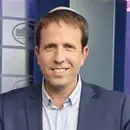
Channel 12 News anchor Yaron Avraham spoke with six former hostages to hear gripping firsthand accounts of their prolonged captivity in Hamas tunnels and the ways they struggled to survive both mentally and physically.
Former hostages Ohad Ben-Ami, Bar Kupershtein, Elkanah Bohbot, Segev Kalfon, Maxim Herkin, and Yosef Haim Ohana spoke openly about the bonds they formed and the sources of strength that sustained them in the tunnels.
Ohana recalled the first Shabbat the group spent together, shortly after he, Herkin, and Kalfon were moved into the same tunnel as Kupershtein, Bohbot, and Ben-Ami. Two days after their reunion, the men marked Friday night with an improvised ceremony to welcome Shabbat, led by those who had already been held there.
“They would stand and sing, and they told us, ‘Come, we’re making Shabbat Eve kiddush,’" Ohana recounted. “We said, okay, we’ll put paper on our heads like kippot."
As the men began singing familiar melodies from home, the moment took on unexpected intensity. “Suddenly they were shouting the songs," Ohana said. “The place shook, and we felt it was good that we were there together."
Kupershtein described the moment as deeply moving, calling it one of the most powerful experiences of their captivity.
Later in the interview, Ben-Ami reflected on how shared faith helped them make sense of their survival. He said the group often spoke about divine providence, noting that each of them had faced life-threatening situations during the October 7th massacre. “We told ourselves that maybe there was a God who wanted us to live, that we would survive this and get through it," he said.
When asked whether faith played a significant role underground, Kalfon replied unequivocally that it had. He said he even reached a point where he sewed makeshift kippot from Ben-Ami’s robe.
Ben-Ami, who described himself as a secular kibbutz resident, said the experience changed him. “I felt I had to say thank you for the food, for the water, for everything," he said. “I didn’t know how, and they taught me."
Kalfon added that anything connecting them to their Jewish roots gave them strength, from Shabbat rituals and holidays to traditional prayers and songs. “It connects you and gives you power," he said. “You can’t explain it in words."
Avraham also asked whether the massacre had challenged their faith. Herkin responded that he is often asked where God was on that day. “The answer is simple," he said. “What happened on October 7th was the result of human choices and human actions. You don’t place that responsibility on the Creator."