

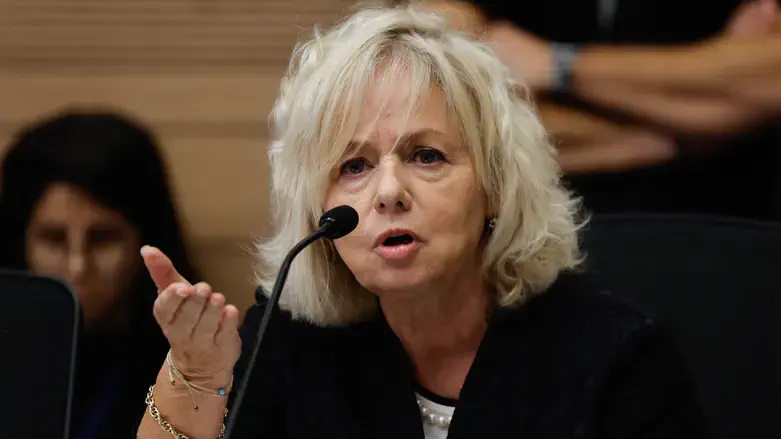
Attorney General Gali Baharav‑Miara issued a formal legal opinion warning against the proposed law to establish a “National‑State Commission of Inquiry” to investigate the failures of October 7.
In the document prepared by her office and submitted to the Justice Minister, she expresses unequivocal opposition to the proposal, presenting a series of serious legal and constitutional concerns.
According to the Attorney General, the proposal has “personalized characteristics,” designed to suit the needs of the current government and undermine fundamental principles of proper governance.
The opinion further states that the proposal lacks the independence, professionalism, and transparency required of a state commission of inquiry.
It also notes that the bill is being advanced without proper professional groundwork and in blatant disregard of a Supreme Court ruling instructing the government to consider establishing an independent commission of inquiry.
The opinion warns that the proposal could significantly disrupt the commission’s ability to fulfill its purpose and even lead to a complete “paralysis” of its work.
In conclusion, the opinion states: “The bill undermines the exceptionally important purpose of uncovering the truth and drawing full lessons regarding the events of October 7 and the war that followed.”
“The proposed framework is riddled with fundamental flaws that will prevent the pursuit of truth and, in practice, thwart any possibility of achieving it. The commission now being proposed lacks the basic characteristics of a state commission of inquiry - independence, professionalism, and impartiality.”
“Procedurally as well,” Baharav‑Miara added, “this bill serves as a tool to circumvent the conditional order issued against the government, while shaping a commission mechanism under conditions favorable to the government ahead of the examination of its own responsibility.”
Communications Minister Shlomo Karhi responded: “The dismissed Attorney General and her associates will not escape the commission of inquiry. The mandate terrifies them; a commission not under their control drives them mad.”
Cabinet Secretary Yossi Fuchs also sharply criticized the opinion. He said that after reviewing the 17‑page document, “I found everything in it except legal reasoning.” Fuchs stressed that the proposed body is independent, with powers identical to those of a state commission of inquiry under the law, and with a professional composition to be determined jointly by the coalition and the opposition, “allowing it to pursue the truth with broad public trust.”
Fuchs further challenged the Attorney General’s claims regarding “blurring the separation of powers” and the use of a private member’s bill. “You have to rub your eyes to read this - the legal advisory system complains that the government controls the Knesset, and that a private member’s bill is being misused.”
He accused the Attorney General’s Office of “trying to control the government since its establishment, to the point of becoming a fourth branch of government. It effectively blocks the publication of government bill memoranda that do not align with its agenda by controlling the memoranda website.”
He concluded that in his three years in office, he has yet to receive a single legal opinion “with arguments that hold water,” as he put it.
Attorney General Gali Baharav‑Miara issued a formal legal opinion warning against the proposed law to establish a “National‑State Commission of Inquiry” to investigate the failures of October 7.
In the document prepared by her office and submitted to the Justice Minister, she expresses unequivocal opposition to the proposal, presenting a series of serious legal and constitutional concerns.
According to the Attorney General, the proposal has “personalized characteristics,” designed to suit the needs of the current government and undermining fundamental principles of proper governance.
The opinion further states that the proposal lacks the independence, professionalism, and transparency required of a state commission of inquiry.
In addition, it notes that the bill is being advanced without proper professional groundwork and in blatant disregard of a Supreme Court ruling instructing the government to consider establishing an independent commission of inquiry.
The opinion also warns that the proposal could significantly disrupt the commission’s ability to fulfill its purpose, and even lead to a complete “paralysis” of its work.
In conclusion, the opinion states, “The bill undermines the exceptionally important purpose of uncovering the truth and drawing full lessons regarding the events of October 7 and the war that followed.”
“The proposed framework is riddled with fundamental flaws that will prevent the pursuit of truth and, in practice, thwart any possibility of achieving it. The commission now being proposed lacks the basic characteristics of a state commission of inquiry-independence, professionalism, and impartiality.”
“Procedurally as well,” Baharav‑Miara added, “this bill serves as a tool to circumvent the conditional order issued against the government, while shaping a commission mechanism under conditions favorable to the government ahead of the examination of its own responsibility.”
Communications Minister Shlomo Karhi responded: “The dismissed Attorney General and her associates will not escape the commission of inquiry. The mandate terrifies them; a commission not under their control drives them mad.”
Cabinet Secretary Yossi Fuchs sharply criticized the opinion. He said that after reviewing the 17‑page document, “I found everything in it except legal reasoning.” Fuchs stressed that the proposed body is independent, with powers identical to those of a state commission of inquiry under the law, and with a professional composition to be determined jointly by the coalition and the opposition, “allowing it to pursue the truth with broad public trust.”
Fuchs went on to level a broader critique at the Attorney General’s claims regarding “blurring the separation of powers” and the use of a private member’s bill. “You have to rub your eyes to read this-the legal advisory system complains that the government controls the Knesset, and that a private member’s bill is being misused.”
He accused the Attorney General’s Office of “trying to control the government since its establishment, to the point of becoming a fourth branch of government. It effectively blocks the publication of government bill memoranda that do not align with its agenda by controlling the memoranda website.”
He concluded by writing that in his three years in office he has yet to receive a single legal opinion “with arguments that hold water,” as he put it.