

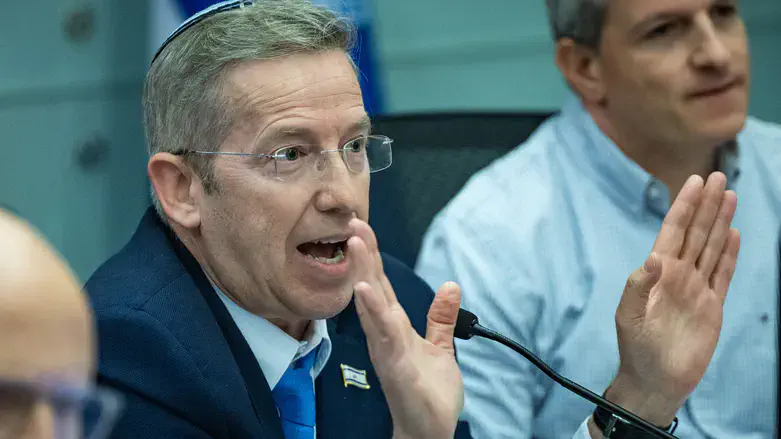
Cabinet Secretary Yossi Fuchs addressed the new draft of the conscription bill in an interview on Tuesday with Kan Moreshet, revealing details from the negotiations with the haredi leadership.
According to Fuchs, the formulation of the conscription bill was accompanied by discussions outside of the Knesset over the years to reach agreements with the haredi leadership. "To them, Torah students are 'Sayeret Matkal' (the IDF's most elite unit), not the military's Sayeret Matkal. You could argue, but that's the fact."
Fuchs revealed that during discussions held with ex-Defense Minister Yoav Gallant, he demanded to reach a 50% draft rate within five years - a demand that the haredim have opposed in the past. "The bill that was presented in the end talks about 50% within five years. We have reached Gallant's bill."
He notes that while the religious Zionists have begun demanding that the haredim share the burden since the October 7th Massacre, the legislator must act realistically: "Desire is one thing, reality is another. You can't draft everyone with the push of a button."
Fuchs rejected the claim that the bill would only result in a small increase in conscription. He claims that there would be a sharp rise, with the bill demanding over 8,000 enlistees in a year, compared to only 1,800 in previous years.
He explained the new sanctions system stated in the bill, which would be implemented the moment it is passed, regardless of the quotas are met: "Anyone who reaches the age of 18 and does not enlist can not receive a driver's lisence, can not leave the country, can not study, can not work, does not recieve tax credits, and can not recieve adequate representation. The party is over."
Regarding additional sanctions, he said: "If the group of haredim who deferred service doesn't meet 8,140 enlistees, the additional personal sanctions will be activated." Among those sanctions are the denial of subsidized daycare, reduced purchase tax, housing discounts, and eligibility for affordable housing.
He acknowledged that such a law is difficult for the religious Zionist public, “which carries most of the burden,” but said this is the only mechanism that has actually succeeded in increasing Haredi enlistment.
Regarding reports that eight MKs oppose the bill, he said: “We knew about four of them from the outset. Others want adjustments. I assume there will be refinements and changes, but they understand the big picture.”
He concluded: “Without such a law, we won’t raise enlistment rates. Court rulings and arrests didn’t draft haredim. This will work.”