

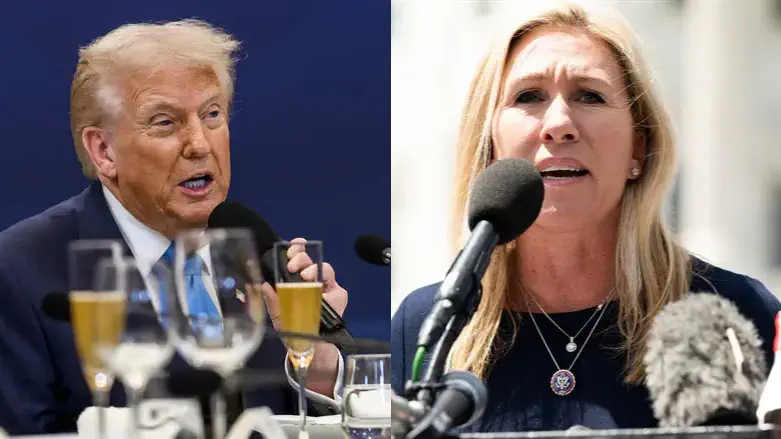
In a stunning turn that underscores deepening fractures within the Republican Party, firebrand Congresswoman Marjorie Taylor Greene announced her resignation from the US House of Representatives, effective January 5, 2026, following a vicious public feud with President-elect Donald Trump over the long-suppressed Jeffrey Epstein files.
BBC reports that the Georgia Republican, once a staunch defender of Trump's "America First" agenda and a vocal champion of his disputed 2020 election claims, cited the personal toll of Trump's attacks as a key factor in her decision. "Standing up for American women who were raped at 14, trafficked and used by rich powerful men, should not result in me being called a traitor and threatened by the President of the United States, whom I fought for," Greene wrote in her resignation letter, released via social media. She described Trump's barbs as "hurtful" and vowed she would not play the role of a "battered wife" in a toxic political marriage.
The rift erupted in recent weeks when Greene, who has emerged as one of the loudest voices demanding the full release of documents tied to the late convicted pedophile Jeffrey Epstein, accused Trump of dragging his feet on transparency. Greene, elected in 2020 amid controversy over her past embrace of QAnon theories - which she later apologized for and disavowed - blasted Trump's economic policies on tariffs and living costs, as well as his initial reluctance to declassify the Epstein materials. She took her criticisms to major news networks, amplifying calls for accountability in what she framed as a fight against elite corruption.
Her confrontations have highlighted her approach to Israel as well, as Greene has in the past tried to cut funding for Israel by claiming that the money was needed to pay down US national debt. The motion was rejected in the House. Greene went on to speak against Israel on other occasions, including saying that Israel was using US aid for genocide.
Trump, who had previously rallied alongside Greene at a March 2024 campaign event in Rome, Georgia, fired back with fury on social media. Labeling her a "traitor" and "wacky," the incoming president threatened to back a primary challenger against her in 2026. "For some reason, primarily that I refused to return her never ending barrage of phone calls, Marjorie went BAD," Trump posted on Truth Social last week.
The spat appeared to force Trump's hand on the Epstein issue. Amid mounting pressure from fellow Republicans - many of whom viewed the files as a litmus test for combating deep-state cover-ups - Trump reversed course and signed legislation this week mandating the Justice Department to release the documents within 30 days. The move, once a unifying cause for Trump loyalists, had devolved into a flashpoint exposing vulnerabilities in the MAGA coalition.
In an ABC News interview following Greene's announcement, Trump hailed her exit as "great news for the country," while offering a backhanded olive branch on Truth Social: "Nevertheless, I will always appreciate Marjorie, and thank her for her service to our Country!" He also revisited old advice, noting her dismal polling for a potential run at Georgia governor or a Senate seat - ambitions Greene has publicly denied pursuing.
Greene's departure deals a blow to the slim Republican majority in the House, where the GOP clings to power by just a handful of seats over Democrats. With the 2026 midterms looming, her seat in Georgia's conservative 14th district - a safe haven she won handily in past cycles - could tilt the balance in a chamber already rife with internal divisions. In her farewell video, Greene tallied her legislative wins, from border security pushes to challenges against "woke" policies, positioning her exit as a principled stand rather than a retreat.