

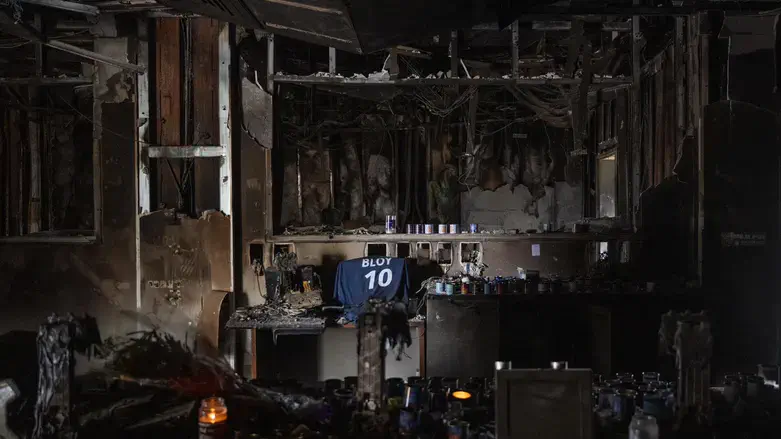
The Supreme Court this morning (Tuesday) heard a petition filed by the families of the Nahal Oz lookouts who were killed in the October 7th massacre, demanding the full record of the 24 hours leading up to their daughters' deaths.
The petition was filed about a year ago, but the families say they have still not been given the full footage.
During the hearing, it was revealed that the IDF dismantled the command center's servers that were damaged in the incident and sent them to Elbit Systems in an effort to recover the data, but the attempt failed. Some of the servers, it was reported, were destroyed on the army's orders after being damaged by smoke.
The hearing was held before a panel of three judges and included the families of some of the soldiers who were captured or killed, and their bodies taken to Gaza.
Attorney Gilad Yitzhak Bar-Tal, representing the families, argued at the hearing, "These parents paid the highest price. There is no higher price that can be paid. It cannot be that operational coverage is not documented. It cannot be that the army did not know what to offer the investigative committee. It cannot be that an army does not know how to document events on the side of truth."
By contrast, Daniel Marks from the Supreme Court petitions department in the Attorney General’s Office expressed condolences to the families and stated, "There is no intention and no attempt here to hide anything from the parents. We understand that they want footage and images. We will make an effort to provide any relevant material. The servers were damaged. We tried to retrieve additional data, but the smoke caused damage to the physical drives."
Judge Amit demanded to know who attempted to recover the materials and when, and emphasized that the families are entitled to this information.
Later, Brig. Gen. Tal Leibovitz of the Technological Brigade in Border Defense testified, "A few days after October 7, we dismantled those servers. The servers were damaged by smoke; this is very sensitive equipment. We took them to a private company and tried to recover the data. Unfortunately, we did not succeed. After that, some were destroyed and some remained with us."
Judge Sohlberg remarked, "If one says there is nothing and it turns out there is something to be found, that causes distrust."
The deputy commander of the communications battalion stated at the hearing that a military mobile phone belonging to one of the officers was found, but the information on it is not retained for long: "The device is temporary, photos and chats are deleted from it, and they are only stored on military computers. It is possible that the material is saved there, but I do not know with whom she spoke or about what."
Attorney Bar-Tal added, "We saw live broadcasts that provide a basis for distrust. It is very easy to submit affidavits and then say there is something else. I heard for the first time today that systems were destroyed. The way to resolve the crisis of confidence is to lay the cards on the table."
At the end of the hearing, Judge Amit ordered the IDF to recheck whether additional material exists and to appoint an official to coordinate the handling of the matter. He ruled that the army will be given 30 days for a further search for materials and that the petition will remain open at this stage.