

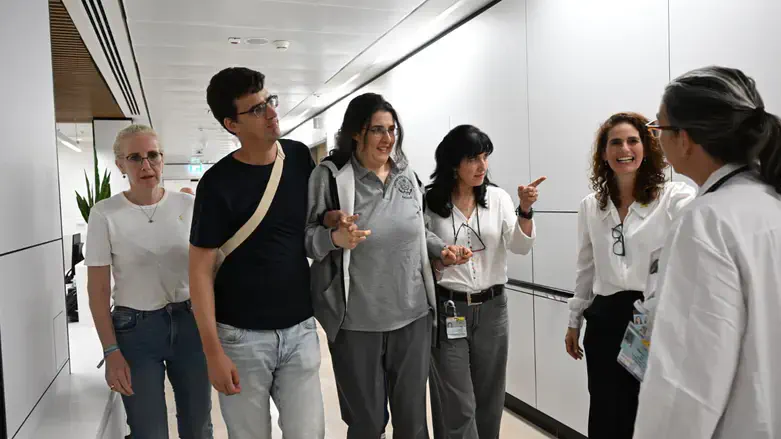
Elizabet Tsurkov, an Israeli and Russian citizen and a PhD candidate at Princeton University, gave an interiew for the first time what happened to her during 903 days of captivity in Iraq.
Tsurkov, who was abducted in Baghdad in March 2023 and held by the Shiite militia Qata'ib Hezbollah, described in an interview with the New York Times the harsh detention conditions, torture, and prolonged isolation.
According to her, she was beaten, exposed to sexual violence, tortured with electricity and left hanging from the ceiling. "They used me as a punching bag," she said, "when I fainted - they poured water on me to wake me and continue." A medical examination after her return to Israel found nerve damage and serious injuries requiring long-term physical and psychological rehabilitation.
Tsurkov entered Iraq on her Russian passport for academic research. In March 2023 she was kidnapped in Baghdad after arranging a meeting with a woman who presented herself as a researcher. She was forced into a vehicle by several men, was beaten, assaulted and taken to a safe house where she was held in harsh conditions.
Initially her captors believed she was a Russian citizen, but after finding proof of her Israeli identity on her phone, they accused her of espionage. Tsurkov denied the accusations, but according to her, after she refused to confess she suffered prolonged torture. "I began to invent false confessions to stop the beatings," she said.
After months of isolation and malnutrition she was moved to another facility where she received basic care, books and television, but was still held in complete isolation without a window for about two years. According to her, during airstrikes carried out by Israel against Iranian targets, the building where she was held shook.
Her release occurred last September. She was transferred to an official Iraqi authority, and then to a villa in Baghdad where she received initial care from local doctors. She was later flown to Cyprus and from there to Israel, suffering severe pain. Upon arrival at the hospital she asked to be brought in on a stretcher, but was persuaded to walk in order to project resilience. In Israel she received medical treatment and support from her family.