

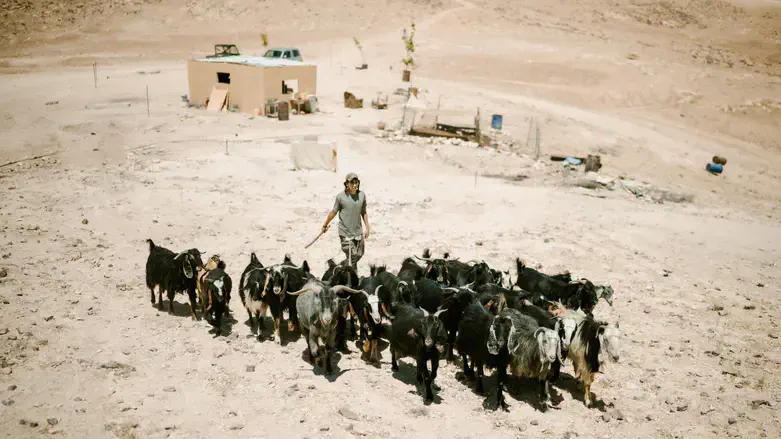
Two serious incidents that occurred last Saturday in Gush Etzion have sparked anger among local residents, who accuse IDF forces of unjustly detaining Jewish shepherds while failing to act against violent Arab rioters.
In both cases, shepherds grazing their flocks were either detained or arrested by IDF soldiers, while-according to the residents-the Arab assailants who attacked them were not stopped.
The first incident took place during the morning hours near Mikneh Avraham Hill, above Ma'ale Amos. Residents reported that a shepherd grazing his flock was ordered by soldiers to leave the area. When he asked to understand the reason, they confiscated his cell phone and arrested him with what witnesses described as unnecessary force.
Following the arrest, the shepherd’s herd was left unattended and fled toward the nearby Arab village of Rashida. Residents who noticed the herd from a distance managed to retrieve it after a long chase-during which they themselves were reportedly attacked by a mob of Arabs.
Hours later, another violent incident occurred near the Magen Avraham farm, close to Ibei Hanahal. A shepherd grazing several hundred meters from the farm was attacked by dozens of Arabs wielding clubs and stones.
According to residents, the attack was preceded by a call to action from the local mosque, where the muezzin was heard over loudspeakers urging villagers to “get the shepherd."
Witnesses said that when local residents rushed to defend the shepherd, IDF soldiers who arrived at the scene detained the farm owner and confiscated his car keys. Other residents were also detained and allegedly treated in a humiliating and hostile manner. “All our explanations that the shepherd’s life was in danger fell on deaf ears," they said.
After the incident, the shepherd reportedly went to the police station to file a complaint-but was instead interrogated under caution on suspicion of assault.
Residents have expressed outrage and frustration with the conduct of the new battalion recently deployed to the sector. “The relationship with the previous battalion was always excellent and warm," said one local farmer. “The soldiers were like our own people and knew how to deal with the enemy properly. Unfortunately, since the new battalion arrived, everything has turned upside down. Sometimes it feels as if they see us as the enemy. I hope the higher command intervenes quickly before something truly tragic happens."