

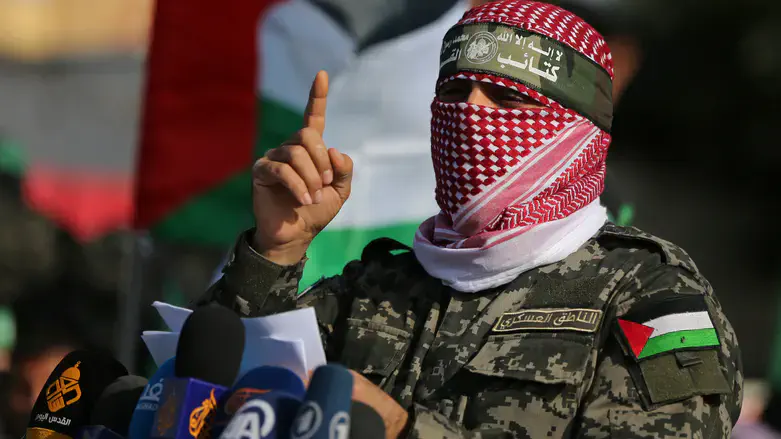
Recent intelligence reveals the extensive scope of Hamas's information and psychological warfare network in Gaza, overseen by the group’s military spokesperson, Abu Obeidah, who was killed by Israeli forces last week.
According to Galei Tzahal, Hamas's propaganda apparatus comprised approximately 1,500 operatives — nearly double the number of personnel employed in equivalent units within the IDF. The operation, developed by Abu Obeidah over the past decade, had grown significantly since Operation Protective Edge, when it consisted of only around 400 members.
Each Hamas battalion was assigned a "propaganda chief" and operated its own command center dedicated to the production of media content. Videos were often compiled using footage transmitted in real time from the battlefield. The guiding principle behind this effort was reportedly that an operation itself was less important than documenting it.
The network also included roughly 400 personnel stationed in central command centers. These individuals served as video editors and media analysts, monitoring Israeli media channels and advising on corresponding propaganda strategies.
In recent years, Hamas invested heavily in modern media tools, including GoPro cameras, protective gear, and mobile communication systems, enabling operatives to continue their activities from locations such as schools and hospitals.
Abu Obeidah played a central role in both military operations and psychological warfare campaigns. He was reportedly involved in every major combat initiative from Operation Protective Edge to the October 7th massacre. He also spearheaded Hamas’s media campaigns — including the production of hostage videos — and personally briefed captives before their release. Intelligence officials say he developed tactics aimed at using psychological pressure to deter an Israeli ground offensive in Gaza.
To date, the IDF claims to have eliminated over 200 members of Hamas's information network, most of whom held command roles. However, more than 1,000 operatives reportedly remain active. Israeli intelligence agencies are currently working to identify a possible successor to Abu Obeidah, who is believed to have left no clear second-in-command.