

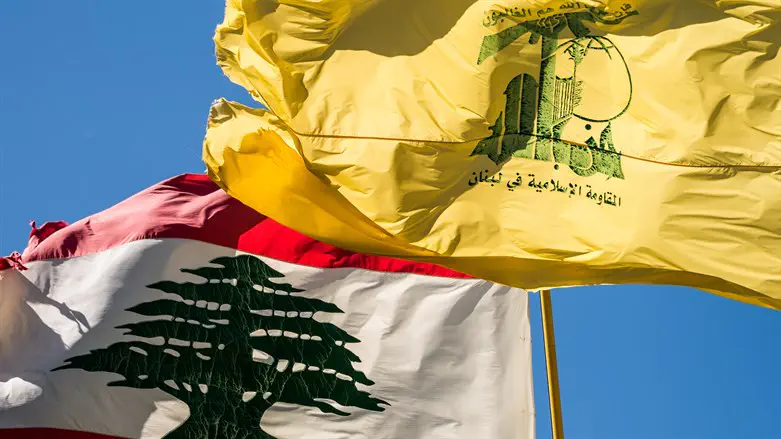
Lebanon's Cabinet has endorsed the general objectives of a US proposal aimed at solidifying a ceasefire agreement, which includes the removal of armed presence throughout the country, notably Hezbollah's weapons.
Information Minister Paul Morcos announced the decision following a cabinet session, stating, "We have agreed to end the armed presence across all territory, including Hezbollah."
The Lebanese government also approved deploying the Lebanese Army to border regions and initiating indirect negotiations with Israel to delineate land borders.
Morcos clarified that the Cabinet has not yet discussed the timeline details outlined in the US document. He noted that the government awaits a plan from the army detailing the mechanism for weapons handover before engaging in further deliberations.
According to a copy of the Cabinet agenda seen by Reuters, the US proposal calls for Hezbollah to be disarmed by the end of the year, alongside a cessation of Israeli military operations and a withdrawal of Israeli forces from five southern positions. The plan, presented by US Ambassador Tom Barrack, represents the most detailed effort yet to dismantle Hezbollah's arsenal following last year’s war with Israel.
During the meeting, five ministers from the Shiite block, which is made up of Hezbollah and Amal, stormed out in protest. Despite the walkout, the Cabinet assigned the Lebanese Army to draft a nationwide disarmament plan, concentrating all weapons under state authority. Morcos emphasized that the ministers' departure does not constitute a resignation, though efforts to persuade them to remain were unsuccessful.
On Tuesday, Prime Minister Nawaf Salam formally tasked the army with preparing an implementation plan to centralize all weapons in the hands of state security forces before the end of the year. The plan is to be submitted to the Cabinet by August 31 for review and approval.
The government framed its decision, described by Hezbollah's opponents as "historic," as part of the US-mediated ceasefire agreement that ended the Hezbollah-Israel war on November 27. That agreement stipulates that only official Lebanese military and security agencies may bear arms.
US Ambassador Barrack congratulated the vote, writing on X: "Promises made, promises kept."
Quoting President Trump, he wrote: “My administration stands ready to help Lebanon create a future of economic development and peace with its neighbors… In Lebanon, there’s a new chance for a future free from the grip of Hezbollah terrorists… A new president and prime minister brought the first real chance in decades for a more productive partnership with the United States.”
He also added a quote by Secretary of State Marco Rubio: “Our goal in Lebanon is a strong Lebanese state that can take on and disarm Hezbollah.”
Sources close to Hezbollah told Sky News Arabia that the ministers' withdrawal was a protest against the discussion of the "Barak paper," warning that "all options are on the table" if the proposal is adopted.
Hezbollah has insisted that the current ceasefire agreement is the only relevant framework and has called on Israel to fully adhere to its terms. The group criticized the Cabinet's move as a "grave error" and declared it would treat the decision as if it did not exist.
Among Hezbollah's demands are the withdrawal of Israeli forces from five southern Lebanese positions and an end to Israeli strikes, conditions it says must be met before any domestic dialogue on its weapons can begin within a broader defense strategy.