

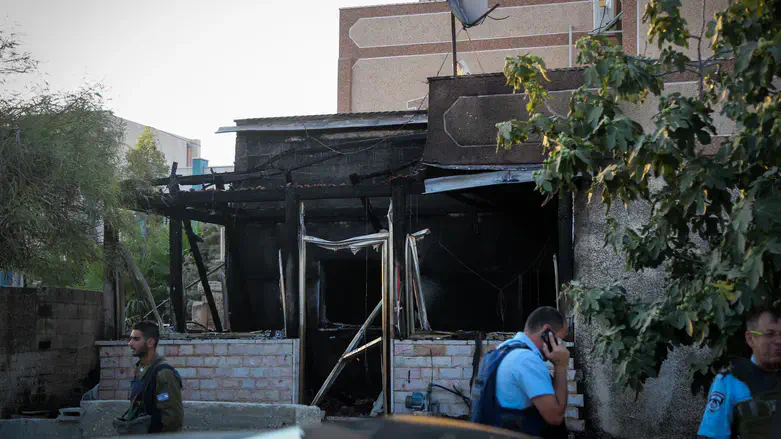
Nearly a decade after the Duma arson case, the Israeli Ministry of Justice has closed a complaint filed by a minor who claimed he was subjected to physical and psychological abuse during his detention.
The complaint, submitted by Attorney Adi Kedar of the Honenu legal aid organization, alleged that the minor endured violent and coercive interrogations that led to a false confession. According to the complaint, the interrogators used beatings, psychological pressure, and tactics that violated his free will.
The decision to close the case was made by Attorney Asaf Shavit, Acting Head of the Department for Examining Interrogation Complaints in the ISA, with the approval of Deputy State Attorney Alon Altman. In a letter recently sent to the complainant, the ministry acknowledged that the District Court had disqualified confessions made during so-called “necessary interrogations,” but emphasized this did not automatically render the methods illegal.
The ministry further asserted that the “special means” employed during the interrogations were legal and fell within the scope of "acceptable subterfuge.”
“The review of evidence and court rulings does not raise suspicion of any criminal or disciplinary offense by the interrogators,” the ministry stated. “Therefore, no investigation will be opened.”
Attorney Kedar strongly criticized the decision, particularly the years-long delay in addressing the complaint.
“It’s outrageous that it took nearly ten years to respond to such a serious allegation,” he said. “There is clearly a lack of oversight over the ISA’s conduct—no accountability, no scrutiny.”
He also rejected the ministry’s reliance on court rulings to evaluate the interrogators' actions, calling it “absurd and irrational.”
“This was a teenager who was physically and mentally abused by adults over an incident that happened months earlier,” Kedar said. “The violence started with aggressive informant tactics, as the Acre prison verdict showed, and continued in interrogation rooms where he suffered physical, mental, and verbal abuse. No court ruling can justify that.”