

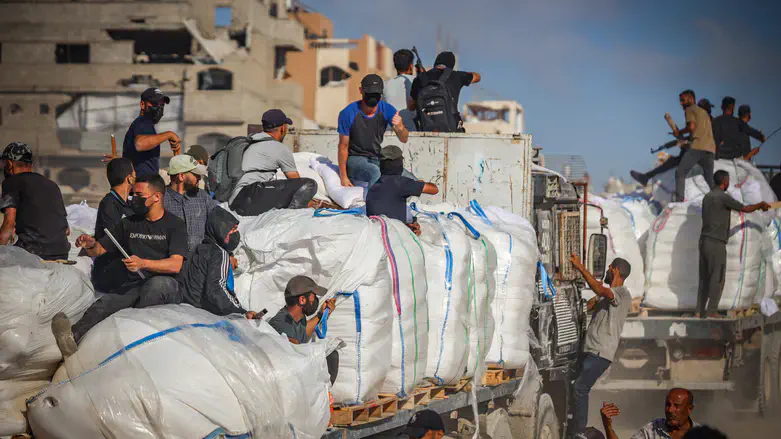
Starting at 10 a.m. Sunday, the IDF implemented a temporary humanitarian pause in several areas of the Gaza Strip, including the north, to facilitate the delivery of aid. The pause will last until evening.
The move follows a high-level security meeting between Prime Minister Benjamin Netanyahu, Defense Minister Israel Katz, Foreign Minister Gideon Sa'ar, and other senior officials. As part of a broader effort to boost humanitarian assistance and counter accusations of intentional starvation, the IDF resumed aerial aid drops over Gaza.
Earlier today, additional aid trucks entered Gaza from Egypt. On Saturday night, the United Arab Emirates announced plans to airlift humanitarian supplies into the territory.
The IDF said it has taken a number of proactive steps to improve humanitarian conditions. In the past week alone, more than 250 aid trucks have been unloaded inside Gaza, with hundreds more awaiting collection at the border by United Nations agencies. The military stressed that it is working to ensure that humanitarian aid reaches civilians and not Hamas.
Despite the humanitarian efforts, the move has sparked political controversy within Israel.
Minister of National Security Itamar Ben Gvir sharply criticized the decision, claiming it undermines Israel’s military goals and strengthens Hamas. He revealed that a key security meeting occurred over Shabbat without his involvement, reportedly to avoid Sabbath desecration—an explanation he rejected.
"This is a surrender to Hamas’ propaganda," Ben Gvir said. "It endangers our soldiers and delays the return of hostages. Increasing humanitarian aid only serves Hamas’ interests and distances us from total victory."
In contrast, President Isaac Herzog expressed strong support for the aid initiative. "These humanitarian steps are morally and strategically essential," Herzog said. "They demonstrate our values, respond to international concerns, and help differentiate Israel from those who seek its destruction."
He emphasized that the responsibility for the suffering in Gaza lies with Hamas, which launched the conflict and continues to reject ceasefire and hostage release proposals.
"This is not a concession," Herzog stated. "It is a vital part of our war effort, both to restore security for Israeli citizens and to bring our kidnapped brothers and sisters home."