

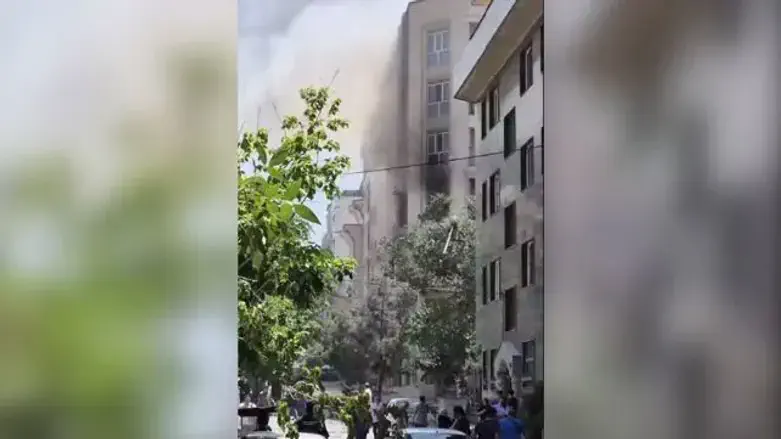
For over two weeks, a string of unexplained fires and explosions has shaken Iran, hitting everything from oil refineries and apartment blocks to roads near major airports and even a shoe factory. The incidents, occurring at a pace of one or two per day, have deepened a sense of unease in a country still reeling from the recent war with Israel and the United States.
The New York Times reports that publicly, Iranian officials have dismissed the explosions as accidents - gas leaks, aging infrastructure, or even controlled burns gone awry. But behind closed doors, several high-level Iranian officials, including a member of the Islamic Revolutionary Guard Corps (IRGC), have expressed serious concerns that these may be acts of sabotage.
While Iran has many adversaries, the officials said they suspect Israel is behind the attacks, citing its long history of covert operations inside Iran, including assassinations, drone strikes, and explosions targeting nuclear and military infrastructure. Their suspicions echo those of a European diplomat familiar with the region, who also pointed to Israel’s past operations as likely evidence of involvement.
Though none of the officials provided concrete proof, the pattern and frequency of the incidents, especially at sensitive sites, have fueled speculation. Last weekend, a fire at the Abadan oil refinery in southern Iran killed one person, injured many more, and knocked out part of the facility. Elsewhere, residential buildings have been rocked by explosions so forceful they have collapsed walls and ceilings.
One such blast in the city of Qom severely damaged an apartment complex and injured seven. According to two Iranian officials, the unit where the explosion occurred had been rented by unidentified operatives who allegedly left the gas on intentionally before fleeing.
Another explosion in a Tehran high-rise, home to judicial employees, blew out walls and windows. Officials speculated that the attack may have been designed to send a message to Iran’s judiciary, just as past Israeli operations targeted nuclear scientists.
Iranian leaders have been cautious not to publicly blame Israel, fearing that doing so might force a retaliatory response and risk triggering another war. The country’s military capabilities are still recovering from damage suffered during last month’s conflict, which saw widespread strikes on missile launchers, military bases, and nuclear facilities.
Israel has neither confirmed nor denied involvement. But in a rare June speech, Mossad’s director celebrated the agency’s recent actions in Iran and vowed to continue its operations. A Farsi-language social media account linked to Mossad even joked about the situation, referencing Iranian superstitions and traditional practices meant to ward off misfortune.
In the face of growing public anxiety, Iranian officials have continued to offer mundane explanations. Fires have been attributed to weed control, garbage burning, or poor maintenance. Tehran’s fire chief blamed faulty gas appliances and outdated infrastructure. But these explanations have failed to convince many Iranians.
“The government’s lack of transparency and vague responses have only made things worse,” said Omid Memarian, an Iran expert with the Washington-based group DAWN. “People know the regime often covers up or denies Israeli attacks.”
In cities like Kashan, close to key nuclear sites, residents report living in fear. “A lot of us think Israel is behind this and that war could start again,” said a cafe owner who asked to remain anonymous. “We’re scared and paranoid.”
Adding to the unease was last week’s sudden death of Brig. Gen. Gholamhossein Gheybparvar, a senior IRGC commander. State media attributed his death to complications from chemical weapon injuries sustained in the 1980s, exacerbated by stress from the recent war. Many Iranians remain skeptical.
In response to public concern, officials have attempted to reassure the population. The national gas company released data suggesting no significant rise in gas-related incidents compared to last year. Tehran’s City Council also held meetings to discuss the fires as part of routine public safety updates.
Yet for many Iranians, the sense of crisis remains. Some have turned to humor to cope, circulating memes of Israel’s Prime Minister Benjamin Netanyahu dressed as an Iranian gas technician. But beneath the jokes is a growing unease.
“We’re not in a cease-fire,” said Mahdi Mohammadi, a conservative political adviser, in a recent Telegram speech. “We’re in a fragile pause. It could end at any moment, and the war could begin again."