

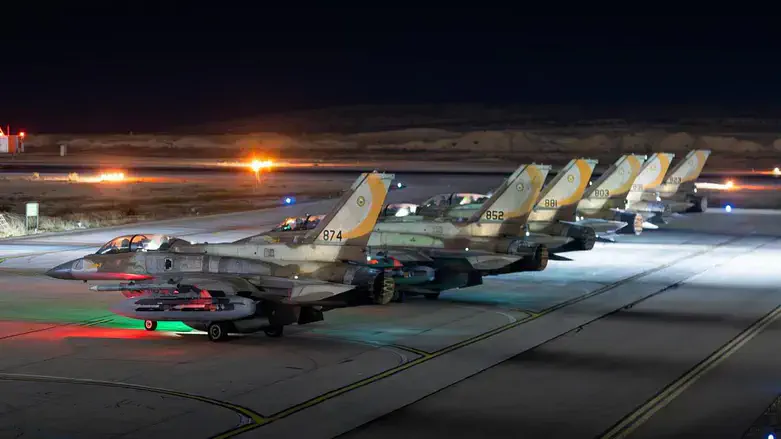
Israeli Defense Minister Israel Katz shared new details about the recent Israeli airstrike on Iran during a press briefing today, shedding light on the planning behind Operation "Hila" and the broader military strategy.
According to Katz, the operation involved extensive discussions, with at least 14 security meetings held to prepare for the strike. A key point of debate was whether the United States would join the attack or simply give Israel the green light to act unilaterally. Simultaneously, the Israeli Air Force increased its capabilities to enable air penetration into Iranian territory.
The operation’s primary objective, set in January, was to delay Iran’s nuclear weapons development for a period, forcing the country to reconsider its nuclear ambitions. Katz noted that Israel did not receive an explicit commitment from the U.S., but understood American silence as tacit approval for the operation.
Four key figures managed the operation: Prime Minister Benjamin Netanyahu, Defense Minister Jatz, Minister Ron Dermer, and the Israeli Chief of Staff. Additionally, a complementary operation called "Tornado" was developed under Katz’s direct instructions, aimed at hitting key infrastructure in Tehran and deterring Iran from retaliating against Israel's home front.
The operation, approved on May 29, was intended as a response to any potential Iranian attack, and it was timed to coincide with the Iranian leadership’s prayers on June 12, when most officials were expected to be home.
Katz emphasized that the operation achieved significant success, particularly through collaboration with the United States, which included B2 bombers targeting Iran’s nuclear facilities. "We dealt a crushing blow to Iran's nuclear and missile capabilities," Katz declared.
Looking ahead, Katz revealed that Israel is preparing an enforcement plan to maintain air superiority over Iran and continue disrupting the country’s nuclear and missile programs. "If anyone thinks we will forgo this achievement, they are wrong. This is not a daily operation like the ones in southern Lebanon, but the ability to enforce must be present at critical points," he said.
Regarding the possibility of Iran restarting its missile program, Katz stressed the strategic importance of preventing material support from other countries to Iran, underlining the need for vigilance and ongoing pressure.
Katz also addressed internal cabinet conflicts, defending the Chief of Staff against criticism. He added that the Israeli Defense Forces (IDF) have been performing exceptionally well, with control over 70% of Gaza territory. He clarified that the military does not manage humanitarian areas but secures them, and acknowledged Minister Bezalel Smotrich’s push for American groups to take control of aid distribution from Hamas in Gaza, which was accomplished by the Gaza Humanitarian Foundation.
In addition, Katz revealed plans for the establishment of a civilian zone in Rafah, aimed at relocating up to 600,000 residents from Gaza. This zone, located between the Morag and Philadelphi corridors, would be administered by international organizations and would not be under Israeli military control.
Katz concluded by stating that the area between Morag and Philadelphi should remain under Israeli control, even in the event of a ceasefire and hostage deal, enabling Israel to continue preventing Hamas from smuggling weapons and rebuilding its military strength.