

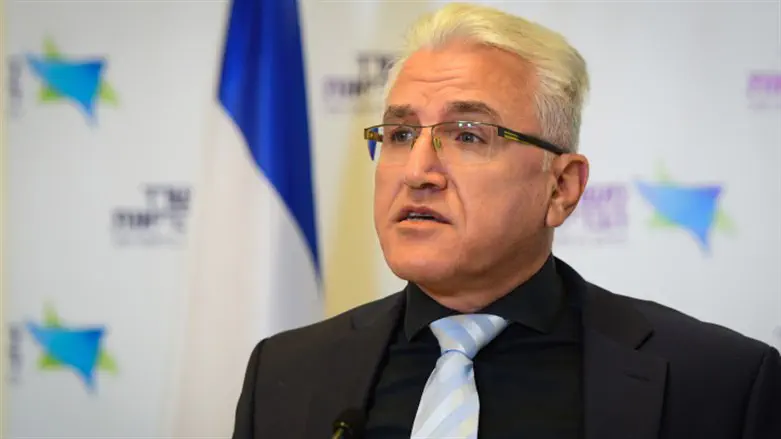
Coronavirus czar Professor Salman Zarka has warned that Israel may be in for a wave of post-coronavirus PIMS (Pediatric inflammatory multisystem syndrome) cases, Israel Hayom reported.
According to Prof. Zarka, "It takes time from the moment of infection until we see symptoms such as PIMS. Unfortunately, we have started to notice these symptoms in Israel as well, and there are about ten cases in Israel - seven confirmed and another three suspected. We also see the global picture: In the US and France, they are reporting that PIMS is characterized by multi-system damage after contracting the virus, and not after infection."
"It is still too early to compare the syndrome after Omicron versus after Delta. It's important to tell parents that these symptoms do not appear after the vaccine. Most often they happen after a mild illness which sometimes was not diagnosed, when a child arrives at the emergency room with a fever of respiratory problem."
The widescale spread of Omicron has raised concerns that in the coming months, Israel will discover the secondary damage caused by coronavirus, in the form of both PIMS and long covid. Most children affected by PIMS were perfectly healthy prior to their COVID-19 infections, and did not suffer any pre-existing conditions.
In New Jersey, which has a population approximately the size of Israel's, six cases of PIMS were diagnosed on January 24th alone, while one week prior there had been ten diagnoses in the entire week, Israel Hayom noted. In India and South Africa, there are reports of seizures among children recovered from COVID-19, in addition to the reports of PIMS. The German government has said that there have been 593 cases of PIMS throughout the country.
According to an Israeli Military Intelligence Directorate report, "a calculation done using the rate at which PIMS occurred in children during the Delta wave found that with the current scope of infections in children, there may be 100-200 children who will suffer this severe syndrome in the coming weeks." At the same time, the syndrome is relatively rare, affecting only one child in every 200.