

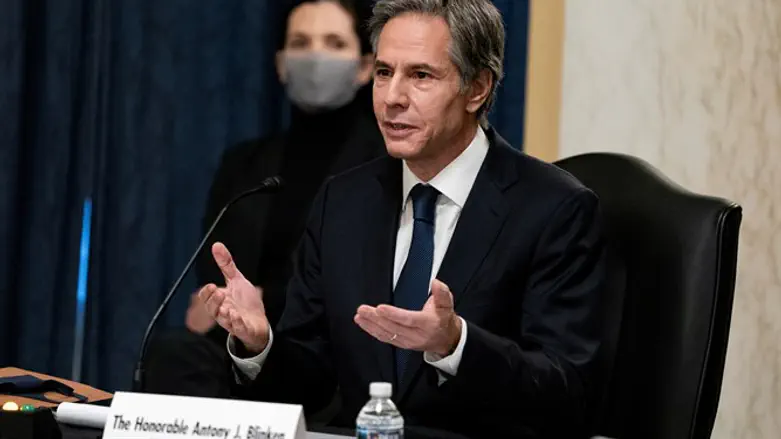
US Secretary of State Antony Blinken said on Sunday that the US is “absolutely in lockstep together” with Germany, France, and the United Kingdom on coordinating a plan to get Iran back into the 2015 nuclear agreement.
“We continue to believe that diplomacy is the best way to deal with the challenges, the threat posed by Iran’s nuclear program,” Blinken told CNN in an interview.
“There’s still a window through which Iran can come back to the talks, and we can come back to mutual compliance with the agreement, and that would be the best result. But it really depends on whether Iran is serious about doing that,” he added.
Blinken said that if Iran chooses not to “engage in a meaningful way and get back into compliance,” then the US and the other countries in the agreement will look “at all of the options necessary to deal with this problem.”
Iran has gradually scaled back its compliance with the 2015 nuclear deal it signed with world powers in response to former US President Donald Trump’s withdrawal from the agreement in May of 2018.
The previous Iranian government, headed by former President Hassan Rouhani, had been holding indirect talks with the Biden administration on a return to the agreement.
However, the negotiations were adjourned on June 20, two days after Ebrahim Raisi won Iran's presidential election, and no date has been set for a resumption of dialogue.
Last week, Ali Bagheri Kani, Iran's new chief negotiator on the nuclear issue, announced on Twitter that negotiations with western powers in Vienna over the Islamic Republic's nuclear program would resume by the end of November.
Blinken’s comments come a day after President Joe Biden met with German Chancellor Angela Merkel, French President Emmanuel Macron and British Prime Minister Boris Johnson on the sidelines of the Group of 20 summit in Rome.
Following the meeting, the four leaders expressed their "grave and growing concern" about Iran's nuclear program.
They said in a statement that Iran "has accelerated the pace of provocative nuclear steps, such as the production of highly enriched uranium and enriched uranium metal."
"Iran has no credible civilian need for either measure, but both are important to nuclear weapons programs," they added.