

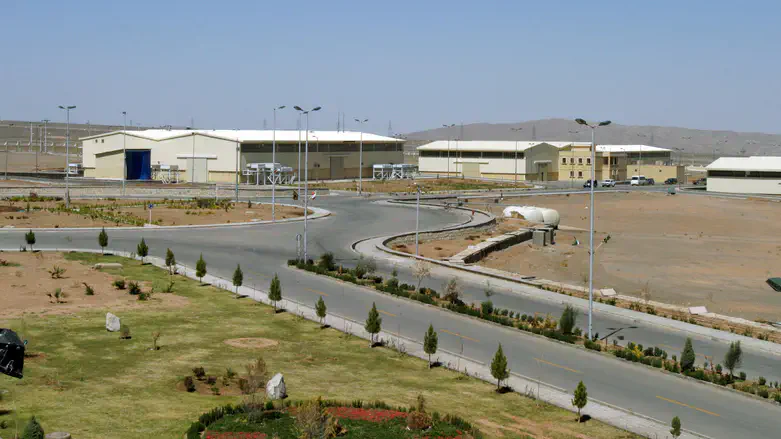
Iran is accelerating construction of a large underground complex in a mountainous area in the center of the country, between the nuclear facilities at Natanz and Isfahan.
New satellite images show rapid progress in excavation and construction at the facility, known as Behjatabad, which is believed to be linked to the Islamic Revolutionary Guard Corps (IRGC). US researchers assess that the complex could serve as a missile base or storage site for other strategic weapons systems, but stress that a connection to Iran's nuclear program cannot be ruled out at this stage.
The findings were published in a new analysis by the Institute for Science and International Security (ISIS), based on recent satellite images of the site. According to the researchers, the scale and pace of the work are unusual even compared with other underground facilities Iran has built over the years.
The complex was first identified by Israeli open-source intelligence researcher Ben Tzion Macales. It is being built in a mountainous area between two of Iran's main nuclear facilities, Natanz and Isfahan, and researchers have been monitoring construction through satellite imagery since its discovery.
One of the most notable findings in the new analysis is the size of the complex. The researchers estimate that, once construction is complete, its secured area could cover nearly 50 square kilometers, or approximately 50,000 dunams.
The latest images also show work on the facility's outer security perimeter, indicating further progress in developing the area surrounding the underground complex.
According to the US institute, Iran has built a series of underground facilities for various purposes over the years. Behjatabad stands out, however, for its rapid pace of construction, which the researchers describe as unusual compared with similar projects in the country.
A review of earlier satellite images also makes it possible to trace the start of work at the site. An analysis of imagery from Vantor found that the first signs of construction activity appeared in the first half of December 2025, about six months after the 12-day war between Israel and Iran, during which the Islamic Republic's main nuclear facilities were attacked.
Development and excavation work at the site expanded throughout 2026, with significant progress visible on the ground. According to the analysis, work continued during the latest war as well.
The new satellite images, taken on Tuesday of this week, show that extensive construction activity is continuing.
Alongside the progress identified at the site, the central unanswered question is the facility's intended purpose. Researchers at the Institute for Science and International Security note that the construction features, security arrangements and pace of work could be consistent with several possible military uses.
One possibility is that the complex is intended for the IRGC's missile forces. Another is that it will house other strategic weapons systems. The researchers stress that the information currently available does not allow them to determine conclusively what Iran plans to operate at the site.
The report stated, "A nuclear purpose cannot be ruled out." However, the researchers clarified that no evidence has so far been identified directly indicating the construction of uranium enrichment infrastructure or other activity related to the nuclear program within the complex.
Another assessment of Behjatabad's possible purpose was published last week by nuclear and missile researcher Sam Lair on the Arms Control Wonk website. Lair examined satellite images from Planet Labs and compared the site's features with those of other military facilities in Iran.
In his assessment, similarities between the complex's layout and known Iranian missile bases could indicate that it is a new base for the IRGC Aerospace Force.
However, Lair also qualified his conclusion, stressing that the additional infrastructure to be built at the site must be examined before its ultimate purpose can be determined.
Meanwhile, construction at Behjatabad comes amid Iran's efforts to disperse and fortify its military and strategic infrastructure following Israeli and US strikes.