

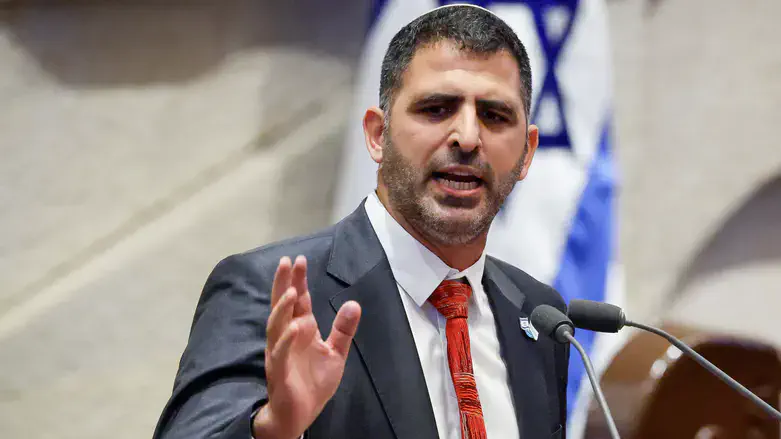
Communications Minister Shlomo Karhi sent a strongly worded letter on Tuesday to Knesset Legal Adviser attorney Sagit Afik, ahead of efforts by the opposition to advance legislation repealing the broadcasting reform he has spearheaded.
The bill is expected to be discussed on Wednesday by a committee chaired by MK Merav Ben Ari (Together), in preparation for a first reading. It is the first legislative initiative that the opposition is seeking to bring to a vote in its first reading.
In his letter, Karhi accused Afik of applying double standards and departing from precedents established by the Knesset's legal advisers. He argued that the accelerated legislative process does not allow for an in-depth examination of the implications of repealing the reform.
Karhi recalled that in June, Afik opposed granting a waiver of the mandatory waiting period for legislation seeking to repeal the kashrut reform. According to Karhi, the legal adviser justified her opposition at the time by explaining that the comprehensive legislation required sufficient time for study and thorough deliberations.
In contrast, the minister argued, Afik granted such a waiver for the current legislation seeking to repeal the broadcasting reform, despite the opposition's intention to reinstate hundreds of statutory provisions, allowing the bill to advance on an expedited timetable.
Karhi also cited a precedent from 2024, when the explanatory notes accompanying legislation seeking to abolish the rotation government framework included the full text of the provisions slated for repeal.
According to Karhi, the current bill contains only a single repeal clause, without specifying which provisions would be repealed or reinstated and without explaining the implications of the move.
"When the same rules are strictly applied to one side of the political spectrum and completely abandoned when the other side advances legislation, this is no longer legal advice but a political position," Karhi wrote.
Concluding his letter, Karhi presented a series of demands to the Knesset's legal adviser. He called on Afik to provide a written explanation for her change of position regarding the waiver of the mandatory waiting period and to present Knesset members with the full text of the provisions that the bill seeks to repeal or reinstate.
He also demanded a detailed discussion of those provisions and called for the committee to refrain from voting on advancing the bill to its first reading until the procedural flaws he identified have been addressed.