

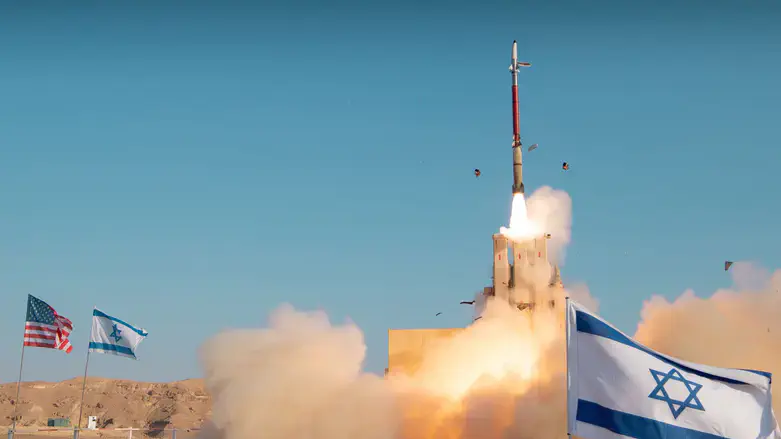
Israel has upgraded its David's Sling air defense system and extended its range to counter a broader array of ballistic threats, Bloomberg reported today (Friday), citing a senior official involved in air defense research in the Israeli Air Force.
The official, who requested anonymity in accordance with Air Force procedures, said the upgrade was intended to enable Israel to withstand sustained missile attacks lasting weeks. The move follows confrontations with Iran that highlighted the need for interceptor systems that can be produced in large quantities at relatively low cost.
One of the main advantages of "David's Sling" is the cost of its interceptor, known as "Stunner". According to Bloomberg, each interceptor costs about $1 million, compared with more than $4 million for a PAC-3 interceptor used by the US Patriot system. Bloomberg Intelligence analyst Wayne Sanders estimates that the Stunner also costs about a third as much as an Arrow 3 interceptor.
David's Sling, jointly developed by Rafael and US company RTX, is designed to counter medium-range threats and forms part of Israel's multilayered air defense network alongside Iron Dome and the Arrow systems. According to the report, the upgrade expands its capabilities against ballistic missiles while reducing reliance on more expensive interceptors.
Bloomberg noted that some ballistic missiles penetrated Israel's defenses during the confrontations with Iran. The attacks also provided the IDF with extensive operational data, enabling adjustments and improvements to air defense systems, sometimes within days.
According to a defense industry source quoted in the report, Rafael and RTX can produce thousands of interceptors annually in Israel, alongside about 2,500 additional interceptors in the United States for the Iron Dome and David's Sling systems. This comes as the United States struggles to meet growing demand for advanced Patriot interceptors.
The upgrade also comes amid Iran's efforts to rebuild its missile stockpile. According to a Western intelligence assessment reported by Bloomberg, Iran still has at least 1,700 ballistic missiles and produces about 50 additional missiles each month.