

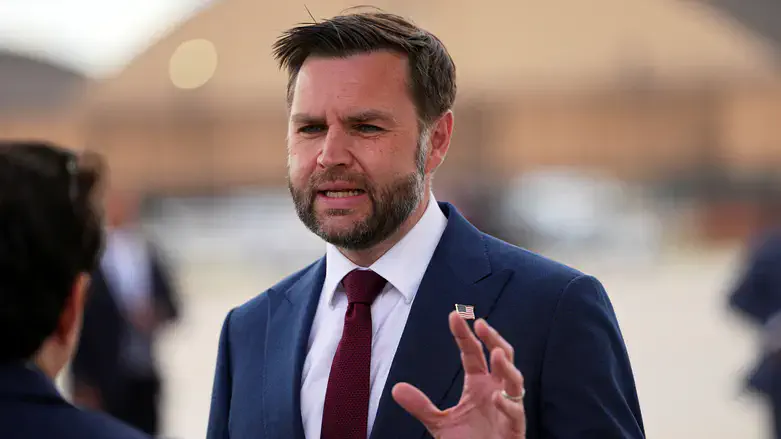
US Vice President JD Vance blamed growing dissatisfaction with America's relationship with Israel as one of four major reasons Republicans suffered such grievous losses in the 2026 midterm elections.
In a lengthy post on X analyzing the Republican defeat, Vance revealed that internal polling had identified demands to change US-Israel relations among the leading concerns of voters who supported President Donald Trump in 2024 but voted for Democrats two years later.
According to Vance, a pollster whose predictions closely matched the election results asked former Trump supporters what would persuade them to return to the Republican Party.
The four leading responses, which Vance said accounted for nearly all the answers, were:
1. End the war.
2. Focus on the cost of living and inflation.
3. Put America First.
4. Change America's relationship with Israel.
"Our voters showed up. And the above four reasons are why many of them voted for Democrats," Vance wrote.
The Vice President claimed that dissatisfaction with US policy toward Israel has become a significant electoral concern among some voters who previously supported Trump, although Vance did not specify what changes those voters wanted in the relationship between the two countries.
Vance argued that Republican losses could not primarily be attributed to low turnout, explaining that the party's supporters had participated in substantial numbers but that many had crossed party lines.
In Florida, for example, he noted that the electorate was nine percentage points more Republican than Democratic, only slightly less favorable to Republicans than in 2024.
"The main problem is not turnout. The main problem is that many people who voted for Trump/Vance in 2024 voted for Democrats in 2026," he wrote.
Vance said his campaign's data analysts had initially been optimistic because Republican turnout appeared relatively strong, even in states where polls predicted significant Democratic victories.
However, one analyst warned him that the numbers concealed a serious problem: voters who had supported Trump and Vance in 2024 were angry with the administration and intended to support Democrats.
"Our voters are turning out, but they may not vote for us," the analyst reportedly told him.
Vance also revealed that another pollster had predicted Republicans would lose the national generic congressional ballot by 13 percentage points, a margin that surprised even him.
While acknowledging that Republican economic messaging may have been inadequate, Vance insisted that the principal reason for the party's defeat was the war.
"The reason we lost is the war. The president himself said so last night," he wrote.
He defended television personality Rachel Campos-Duffy, who had faced criticism for advocating a diplomatic resolution to the conflict, saying that her political advice had proven sound.
Vance also warned Republicans against using the election results to promote immigration amnesty, arguing that such proposals would fail to address the actual reasons voters had abandoned the party.
"If you'd like to argue it was worth it, that losing the Senate for the next 6 years was worth it, then do so. Argue it was a worthwhile cost to pay. Agree or disagree, that's at least honest," he wrote.
"But everyone knows why we lost. And any honest conversation about where we go from here must start there."
Despite the election setback, Vance concluded with an appeal to disaffected Republican voters to remain politically engaged and support candidates who share their views.
"To the people who are pissed off and want to say, 'I told you so': you're right, you did tell us so. Take that energy into electing Republicans who share your worldview," he wrote.
"To the people who are just pissed at the results, you should be. Let's take that anger and get back to the work of saving our country."