

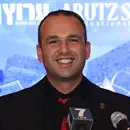
Former Knesset member Nissim Ze'ev, one of the founders of the Shas party, sharply criticized the party's leadership and its chairman, Aryeh Deri, following the election results. In an interview with Arutz Sheva-Israel National News, he called on Deri to step down as party leader.
Ze'ev argued that Shas's loss of five Knesset seats was partly the result of Deri concentrating power in his own hands, effectively becoming the party's sole and undisputed leader. He said that making support for Shas dependent on personal loyalty to Deri had damaged the party.
Despite the disappointing results, Ze'ev believes Shas can win back a significant portion of the voters it lost. He stated that some voters switched to Otzma Yehudit and Likud, while others, including voters from the Torah-observant community, moved to United Torah Judaism.
Ze'ev also blamed Deri's management of the election campaign, arguing that veteran Shas figures had been sidelined.
"He didn't give anyone else a role. He wanted to be alone. He was the only king," Ze'ev said.
He questioned why longtime party figures, including Yaakov Margi and Yitzhak Vaknin, had not been involved in grassroots campaigning. Comparing the campaign to previous elections, when senior Shas officials regularly traveled together to towns and communities in Israel's periphery, Ze'ev claimed that this time the party's activities were barely noticeable beyond Deri's inner circle.
Addressing the controversy surrounding the military draft law, Ze'ev argued that the issue had been exploited during the election campaign as a political weapon against the haredi community. He said various parties competed to intensify their rhetoric against haredi Jews against the backdrop of the war.
Asked whether Shas should have changed its position on military service following October 7, Ze'ev responded that many of the party's voters serve in the IDF and reserves, but that their service receives insufficient recognition. He pointed out that he and members of his own family had also served in the military.
When asked how Shas could recover, Ze'ev said the first step must be Deri's resignation.
"Aryeh Deri said he wants to leave, so the first thing he should do is go," he said, expressing doubt that the party chairman would actually step down.
According to Ze'ev, rebuilding Shas requires bringing new figures into its leadership rather than continuing to rely on Deri's associates. He also criticized the party's decision-making process and the involvement of the Council of Torah Sages.
Ze'ev recalled his personal disputes with Deri over the years, which he claimed ultimately led to his removal from political positions.
Turning to the political deadlock, Ze'ev proposed establishing a national unity government in which Benjamin Netanyahu would serve as Prime Minister for two years, followed by Gadi Eisenkot for another two years.
He argued that such an arrangement was necessary to reduce the divisions and polarization within Israeli society. At the same time, he opposed forming a government that would depend on the support of Arab parties.
Toward the end of the interview, Ze'ev was asked whether Shas might join Eisenkot in a coalition that would leave Likud outside the government.
He responded that as long as Deri remained chairman, such a scenario was possible, expressing doubt about whether Deri would maintain his political alliance with Netanyahu.
However, Ze'ev warned that Shas joining the left-wing bloc could cause further severe damage to its electoral strength.
"If we turn toward the left today, Shas will not pass the electoral threshold in the next election," he said.