

Israel's three major television news networks released their final election polls on Friday evening, the last polls permitted to be published under Israeli law ahead of Tuesday's elections.
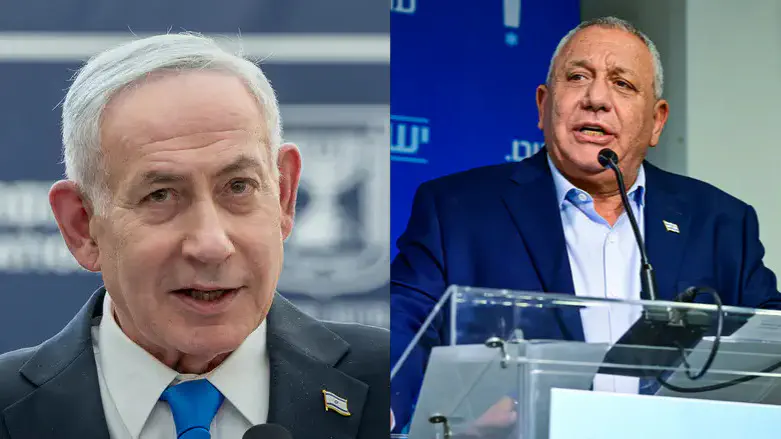
In the Kan 11 News poll, Gadi Eisenkot's Yashar party receives 22 seats, followed by Likud with 20 and the Together party, led by Natftali Bennett, with 14. The Joint List wins nine seats, while Otzma Yehudit, the Democrats, Yisrael Beytenu, and United Torah Judaism each receive eight.
The Religious Zionist Party-Zehut alliance and Shas each receive seven seats, Ra'am wins five, and the Reservists and Economic Party, led by Yoaz Hendel and Yaron Zelekha, receives four.
According to the Kan 11 News poll's bloc breakdown, Eisenkot's bloc receives 52 seats, compared to 50 for Netanyahu's bloc. The Arab parties hold a combined 14 seats, while the four seats won by Hendel and Zelekha's party are not assigned to either of the two main blocs.
In the Channel 12 News poll, Yashar leads with 23 seats, followed by Likud with 21 and Naftali Bennett's Together party with 15. The Democrats receive 10 seats, the Joint List nine, and Shas, Yisrael Beytenu, and Otzma Yehudit eight each.
United Torah Judaism receives seven seats, the Religious Zionism-Zehut alliance six, and Ra'am five. Ofer Winter's party, the Reservists and Economic Party, and HaTzibur HaCharedi (the Haredi Public party) all fail to cross the electoral threshold.
According to Channel 12's bloc breakdown, the coalition parties receive 50 seats, the opposition parties 56, and the Arab parties 14.
Eisenkot's Yashar party also leads the Channel 13 News poll, receiving 22 seats. Likud follows with 19 seats, while Bennett's Together party receives 14. The Democrats win 10 seats, and the Joint List receives nine.
The Religious Zionism-Zehut alliance receives eight seats, as do Yisrael Beytenu, Otzma Yehudit, and United Torah Judaism. Shas and Ra'am each receive seven seats.
In Channel 13's bloc breakdown, the opposition bloc receives 54 seats, the coalition bloc 50, and the Arab parties 16.
The Channel 13 poll also examined parties that fail to cross the electoral threshold. The Amcha Yisrael party, led by Ofer Winter, receives 3.1% of the vote, just below the 3.25% threshold. Yoaz Hendel and Yaron Zelekha's party receives 3%, while HaTzibur HaCharedi, led by Moti Leitner, receives 1.3%.
In addition to projecting the distribution of Knesset seats, the Kan 11 News and Channel 12 polls examined which political leader respondents considered most suitable to serve as Prime Minister.
In both surveys, Eisenkot leads Netanyahu by 44% to 38%. A comparison between Netanyahu and Bennett produces a tie in both polls. In the Kan 11 News survey, each receives 38%, while in the Channel 12 poll, both stand at 39%.
The Kan 11 News poll also examined a potential contest between Eisenkot and Bennett. Of those surveyed, 35% said Eisenkot was better suited to serve as Prime Minister, compared to 22% who preferred Bennett. Another 43% said neither candidate was suitable for the position.
(Arutz Sheva-Israel National News' North American desk is keeping you updated until the start of Shabbat in New York. The time posted automatically on all Israel National News articles, however, is Israeli time.)