

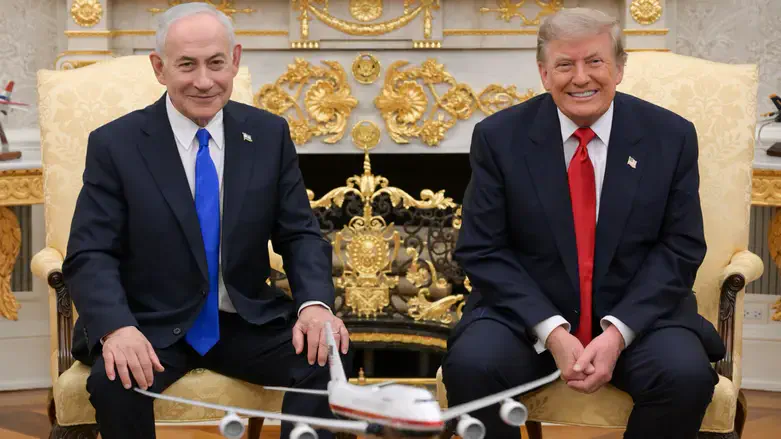
Prime Minister Benjamin Netanyahu ordered the Israel Defense Forces to prepare for a large-scale military strike against Iran, scheduled for the weekend of October 10, but the operation was halted following opposition from US President Donald Trump, the Financial Times reported Wednesday morning, citing three sources familiar with the plans.
According to the report, the IDF had already begun preparing for a bombing campaign lasting several days, targeting nuclear facilities, power plants and other civilian infrastructure, alongside sites associated with the Iranian regime. The planned operation was expected to be even more extensive than the joint Israeli-American offensive launched in February.
The three sources said the primary reason the operation did not proceed was Trump's opposition to restarting the war before the US midterm elections on November 3. The American president was reportedly concerned about the potential consequences of another military escalation for the economy and energy prices, at a time when he faces domestic political pressure.
Despite the postponement, Netanyahu and Trump have continued to threaten renewed military action against Iran. One source familiar with the discussions told the newspaper that the possibility of Israel and the United States resuming strikes in the coming weeks remains on the table.
"Either there will be a deal, or there will be an attack," the source said, explaining that the Trump administration is seeking an agreement with Iran over its nuclear program and control of the Strait of Hormuz as part of a broader arrangement to end the war.
Meanwhile, US Defense Secretary Pete Hegseth arrived in Israel on Monday and met with Netanyahu and other senior defense officials. According to one source, Israeli officials presented their American counterparts with an updated list of targets in Iran, based on new intelligence gathered in recent months.
The proposed targets reportedly include civilian infrastructure that was not attacked during the previous military campaign. However, it remains unclear whether the United States was expected to participate directly in the operation planned for October or whether Israel intended to carry it out independently.
Another source familiar with the discussions raised the possibility that Israel's preparations for a strike were also intended to increase pressure on Tehran during negotiations. According to the source, the final decision on whether to resume military operations depends on the American president's position.
White House Deputy Press Secretary Anna Kelly told the Financial Times that Iran is facing severe economic and military difficulties. She said American efforts to impose a blockade on Iranian ports while allowing oil shipments from Gulf countries to pass through the Strait of Hormuz were producing results. She reiterated that the United States would not attack Iran before the midterm elections.
The report comes as the IDF maintains heightened alert ahead of Israel's parliamentary elections, scheduled for Tuesday, October 27. As part of its preparations, the military has decided to cancel soldiers' leave beginning Thursday and continuing until after election day. IDF Chief of Staff Lt. Gen. Eyal Zamir explained that the measures were intended to ensure that the elections could take place safely and without disruption, given the security threats facing Israel.
The developments also come amid concerns within Israel's defense establishment about the potential consequences of another war for the democratic process. Current and former security officials have expressed concern that launching a major military campaign shortly before the elections could affect both the voting process and subsequent efforts to form a government.
Last week, Axios reported that Netanyahu and Trump had discussed the possibility of renewing strikes against Iran before the elections in both Israel and the United States. However, an American official subsequently denied that such a conversation had taken place. The Prime Minister's Office also denied at the time that Netanyahu was seeking to launch a war before the elections.
On Monday, Netanyahu released a video from an Israeli Air Force base featuring a conversation with Trump. "Donald, you said we have a job to finish, and we're going to finish it together," Netanyahu told the American president.
Trump replied: "You're a great fighter, and we're going to prove that very soon. You're the man I want by my side."
Tensions with Iran have continued since the fragile ceasefire reached in April, following the joint Israeli-American offensive. In the months since, Washington and Tehran have exchanged strikes amid the struggle over control of the Strait of Hormuz and continuing disputes surrounding Iran's nuclear program.
According to the report, even if Netanyahu fails to form a government following the elections, he is expected to remain in office as caretaker prime minister until a new government is established. This possibility has raised questions within the defense establishment about the prospect of a decision to launch a war during the transitional period.
The Prime Minister's Office did not respond to repeated requests for comment from the Financial Times. The IDF declined to comment on the report.