

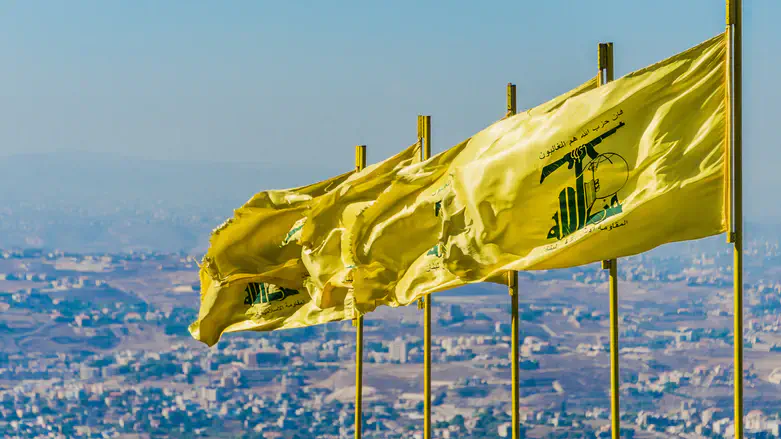
Lebanese security forces have detained two suspected Hezbollah operatives after discovering approximately 500 kilograms of explosives concealed in a vehicle traveling toward Beirut, a judicial source told AFP on Saturday.
The suspects were stopped Thursday afternoon at a checkpoint in Dahr al-Baidar, eastern Lebanon, near a major route connecting Lebanon and Syria.
According to the source, who requested anonymity, officers searched the vehicle and uncovered substantial quantities of two types of explosives.
Security personnel confiscated “250 kilograms of TNT-type explosives and 250 kilograms of C4-type, a highly explosive substance," the source told AFP.
Preliminary findings suggest that both detainees have connections to Hezbollah, the Iranian-backed terrorist organization.
One of the men is reportedly the son of a Hezbollah official, while the second is believed to be a member of the organization.
Investigators have not yet determined where the explosives were intended to be delivered.
Lebanese authorities have not officially verified the information provided by the judicial source.
The reported arrests come amid ongoing efforts to implement a US-brokered agreement between Israel and Lebanon aimed at securing Hezbollah's disarmament and facilitating a phased Israeli military withdrawal from Lebanese territory.
Under the framework reached in June, Israeli forces are to withdraw gradually as Hezbollah is fully disarmed. The Lebanese military is expected to assume control of designated areas, referred to as “pilot zones," following the Israeli withdrawal.
Washington has continued facilitating negotiations between the two countries concerning the implementation of the arrangement.
At a meeting in Rome, Israeli and Lebanese representatives discussed the possible composition of a monitoring mechanism that would oversee Lebanese army deployments in the designated areas and supervise the dismantling of Hezbollah's military infrastructure and weapons.
Hezbollah did not participate in the negotiations that produced the framework and remains opposed to direct talks with Israel.
The organization has also refused demands to surrender its weapons and has repeatedly violated the ceasefire, complicating efforts to implement the agreement.