

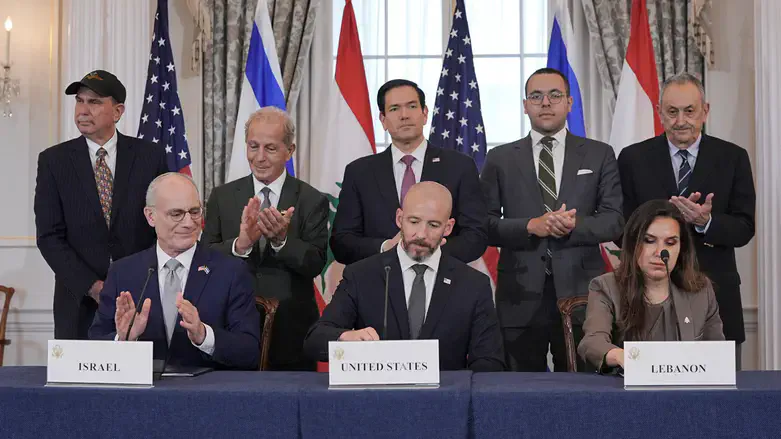
Diplomatic sources told Reuters on Wednesday that negotiators from Israel and Lebanon have selected Britain, Italy, Switzerland, and Indonesia as prospective candidates to participate in an international monitoring mechanism tasked with verifying Hezbollah's disarmament in southern Lebanon.
The selection of nations emerged during US-mediated discussions held in Rome last week. Those talks formed the seventh round of negotiations aimed at executing a June diplomatic accord that links a phased withdrawal of Israeli forces to the complete disarming of Hezbollah.
According to three individuals informed on the matter, the four governments could assist in establishing the monitoring framework's operational scope, contribute administrative personnel, or deploy military troops to participate in or observe inspection activities verifying weapons removal.
A Lebanese official previously acknowledged on Friday that both parties had reached consensus on a candidate list for troop deployment, though the representative declined to name the states, noting that Washington would ultimately decide which countries participate.
A source directly involved in the discussions and quoted by Reuters described the candidate list as preliminary but expressed "cautiously optimistic" sentiment that the process would move forward.
A spokesperson for Israel's Embassy in Washington cautioned that discussions concerning the monitoring body's composition remain active, emphasizing that no formal accord has been finalized.
The Swiss foreign ministry stated it was looking into options to assist "various stabilization processes," while choosing not to share specifics. A spokesperson for the British foreign office indicated the United Kingdom stands ready to back de-escalation measures and long-term security in southern Lebanon, without elaborating further.
Official representatives from both the Indonesian foreign ministry and the Lebanese presidency did not immediately respond to requests for comment.
The development follows remarks on Tuesday from a US State Department official, who dismissed assertions of a diplomatic deadlock, characterizing the August 4-6 Rome meetings as “constructive and detailed".
The summit in Italy focused on advancing the Trilateral Framework Agreement concluded in Washington on June 26. A key focus involved expanding designated "pilot zones" in southern Lebanon - including Srifa, Froun, and Zawtar al-Gharbiya, where Lebanese troops began deploying on July 20 - to assume sole security responsibilities once Hezbollah weapons and positions are cleared.
“The sides finalized the details needed to implement the pilot zones and other aspects of the Trilateral Framework, including shared definitions of verification and clearance," the State Department official noted, adding that military representatives established “operating parameters, common maps, and a roadmap to unlock future pilot zones," providing “clear definitions and metrics for success."
Beyond local security handovers, the discussions encompassed US diplomatic initiatives for third-party oversight of Lebanese military clearance operations, alongside separate bilateral talks addressing economic aid for regional reconstruction.
The optimistic assessment stands in contrast to a Sunday night report by the Hezbollah-linked network Al Mayadeen. Citing a Lebanese diplomatic source, the report claimed that direct negotiations between Jerusalem and Beirut are unlikely to resume next month, predicting delays until after the summer.
Hezbollah is not a party to the Lebanon-Israel agreement and continues to refuse to lay down its weapons.