
The ITIM organization has filed an urgent petition with the Supreme Court, sitting as the High Court of Justice, against the Chief Rabbinate Council and its Examinations and Certification Department, requesting an order to show cause requiring them to allow women to take the upcoming Cheshvan examinations and publish special accommodations for pregnant and nursing women.
Following the filing of the petition, Supreme Court Justice Khaled Kabub ordered the Chief Rabbinate and the Ministry of Religious Services to urgently notify the court by 11:30 a.m. Thursday when a response to the petitioner's inquiry is expected.
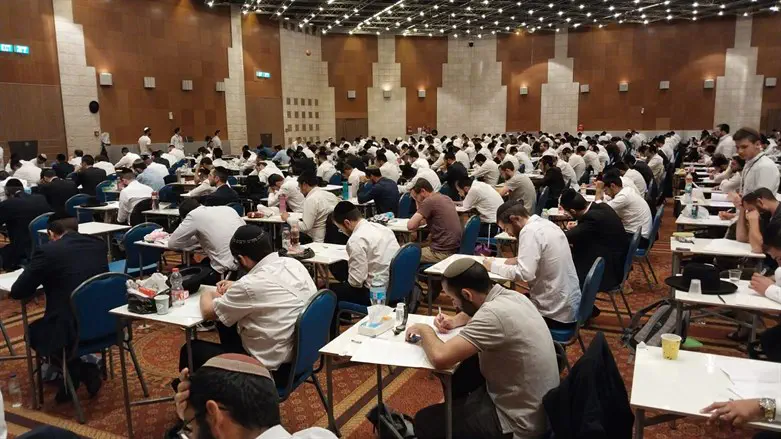
The petition was filed just days before the examinations are scheduled to begin next week, following the Rabbinate's announcement that the examination locations would be separated, with men taking the tests at the International Convention Center in Jerusalem and women at the Ministry of Religious Services building.
Rabbi Shaul Farber, founder and chairman of ITIM, said: "The Chief Rabbinate is an official public institution that is obligated to operate in accordance with the law and the principles of proper administration.
"It is unacceptable that less than a week before the examinations, female candidates remain in complete uncertainty regarding the examination conditions and the accommodations to which they are entitled, to the point that judicial intervention is necessary.
"The failures during the previous examination session directly undermined the integrity of the examinations. I call on the Rabbinate to act fairly, transparently, and responsibly to ensure that the examination conditions meet equal, professional, and respectful standards for all candidates."
Attorney Tamna Gottel of ITIM's legal department added: "The Chief Rabbinate is choosing to drag its feet and ignore repeated inquiries, leaving female candidates in complete uncertainty on the eve of the examination.
"We will not allow their right to equality and freedom of occupation to be violated, nor will we allow a repetition of past failures that undermined women's chances of success and violated an explicit High Court ruling.
"Having chosen not to respond, the Rabbinate left us no choice but to seek protection of women's rights through the courts. We welcome the court's swift decision demanding a clear and immediate response."