

Wall Street Journal journalist Evan Gershkovich, who was arrested in Russia in 2023 on false espionage charges and released after 16 months as part of a historic prisoner exchange, revealed for the first time in an interview with a British radio program the dramatic moments of his arrest and the insights that helped save his life during his imprisonment.
Gershkovich recalled the moment when he met with a source in the city of Yekaterinburg. Suddenly, a group of masked men entered and announced: "I think we ordered this table."
According to Gershkovich, he immediately realized that this was a planned trap by Russia's Federal Security Service (FSB), designed to freeze him in place while the source he had been meeting quickly disappeared into the crowd.
Despite the seriousness of the charges, Gershkovich said that the absence of aggressive interrogations or severe physical torture - tactics well known from Russian intelligence interrogation rooms - led him to a surprising realization early on.
He said that understanding that the authorities did not view him as a genuine spy, but had fabricated a case against him in order to turn him into a high-value political hostage, gave him a certain sense of relief and helped him maintain his mental stability.
He also noted that advance knowledge that Moscow planned to exchange him for Russian assassin Vadim Krasikov, who was imprisoned in Germany, strengthened him during the long months he spent in the isolated Lefortovo prison.
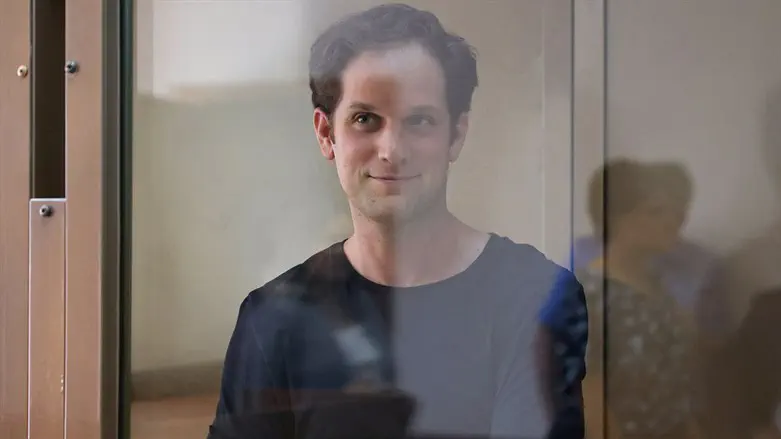
Regarding the photographs of him smiling that were broadcast around the world during hearings on the extension of his detention in Moscow, he explained that the smiles were not the result of taking the situation lightly, but rather a calculated show of defiance against what he described as the authorities' theatrical performance.
He said that his prison conditions included the ability to sleep and relatively reasonable treatment. He contrasted his fate with that of Ukrainian journalist Viktoria Roshchyna, who died in Russian captivity at the age of 27 and whose body was returned bearing signs of severe torture and missing organs.
Gershkovich, who learned about the impending release deal three weeks before it was carried out on August 1, 2024, now lives in Berlin. He said that he receives psychological treatment and is dealing with panic attacks and the effects of post-traumatic stress as a result of the difficult period.
Despite experiencing a traumatic ordeal in captivity, Gershkovich, who grew up in the United States to parents from the former Soviet Union, says he hopes to visit Russia again someday and see what the country will look like after the Putin era.