
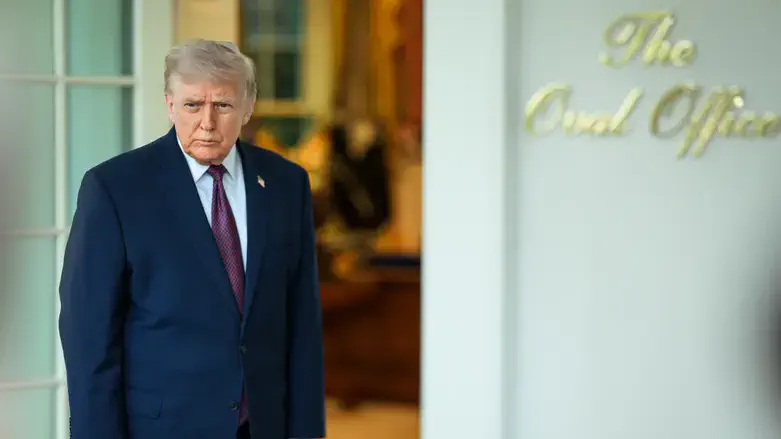
The United States finds itself in a deeply volatile political era, one in which the line separating speech from consequence has grown increasingly indistinct. The recent assassination attempt against President Trump at the White House Correspondents’ Dinner has forced the nation to confront a profoundly uncomfortable reality: the sustained and often vicious verbal denigration of President Trump is not merely a matter of political disagreement, but part of a broader climate that contributes to an environment in which violence becomes thinkable.
This is not a casual observation, nor is it a partisan reflex. It is an unavoidable conclusion drawn from years of increasingly aggressive rhetoric directed specifically and persistently at President Trump. The tone, the repetition, and the intensity of these attacks have transformed him from a political opponent into a symbol of existential danger in the eyes of many.
The modern political lexicon has not merely evolved; it has hardened into something far more corrosive. President Trump is no longer criticized solely on the basis of policy or governance. Instead, he is routinely described in terms that evoke tyranny, dictatorship, and moral catastrophe.
Prominent political figures have repeatedly characterized President Trump using language that elevates political opposition into a struggle against supposed evil. House Minority Leader Hakeem Jeffries has spoken in terms of constant and unrelenting conflict. Massachusetts Senator Elizabeth Warren has described President Trump’s leadership as resembling a fascist system. California Senator Adam Schiff has invoked imagery of authoritarian rule, while Senator Ed Markey has portrayed President Trump as a dictator.
Similarly, Pennsylvania Governor Josh Shapiro has used language suggesting severe consequences should befall members of the administration, and California Senator Alex Padilla has framed the policies of President Trump as inducing fear and harm on a societal scale. Governor J. B. Pritzker has gone even further, calling for sustained disruption against political opponents aligned with President Trump.
Taken individually, each statement may be defended as rhetorical flourish or political passion. Taken collectively, however, they form a pattern: a relentless, coordinated, and highly public campaign of verbal escalation directed at President Trump as a singular figure.
The psychological effect of this sustained rhetoric cannot be understated. When President Trump is described not merely as misguided but as dangerous to the survival of the nation, the nature of political opposition is fundamentally altered.
In such a framework, President Trump is no longer an elected leader with whom one disagrees. He becomes, in the minds of some, a threat that must be stopped at any cost. The language used to describe him-“fascist," “dictator," “authoritarian"-is not neutral. It carries historical weight and emotional force, evoking some of the darkest chapters in modern history.
When this language is repeated across speeches, interviews, and digital platforms, it creates a narrative environment in which extreme conclusions can take root. Individuals who are already predisposed to instability or radical thinking may interpret these descriptions of President Trump as a call to action, rather than as political critique.
The contemporary media ecosystem plays a central role in magnifying these messages. Statements attacking President Trump are not only broadcast but repeated, analyzed, and circulated continuously across television, online platforms, and social media.
Mainstream outlets frequently frame political developments involving President Trump in ways that emphasize crisis and confrontation. Every policy decision, every public statement, and every political maneuver is often interpreted through a lens of alarm.
At the same time, influential commentators and media personalities amplify these narratives, ensuring that the portrayal of President Trump as a destabilizing force reaches millions of viewers and readers.
Even within segments of the political right, figures such as Tucker Carlson, Candace Owens, Megyn Kelly, and Steve Bannon have significantly contributed to the intensity of discourse surrounding President Trump, offering spurious critiques that further complicate the overall rhetorical environment.
The cumulative effect is a saturation of messaging in which President Trump is constantly positioned at the center of controversy, often in the most severe terms available.
Political rhetoric does not mechanically produce acts of violence. Human behavior is influenced by a complex interplay of psychological, social, and situational factors. However, it is equally essential to acknowledge that rhetoric shapes the environment in which individuals interpret those factors.
Violence rarely emerges in isolation. It is often preceded by a gradual escalation in language, a process through which a target is delegitimized and dehumanized. In the case of President Trump, this process has been visible for years.
When individuals are repeatedly told that President Trump represents an existential danger, the threshold for justifying extreme measures may be lowered. The idea that extraordinary threats require extraordinary responses can take hold, particularly among those already inclined toward radical thinking.
The assassination attempt at the White House Correspondents’ Dinner cannot be understood in a vacuum. While the specific motives of the attacker remain under investigation, the broader climate of hostility directed at President Trump forms an unavoidable backdrop.
Another troubling dimension of this issue is the inconsistency with which political violence is addressed. When threats or attacks align with certain narratives, they are condemned swiftly and unequivocally. When they challenge those narratives, responses are often more muted or ambiguous.
This selective outrage undermines the credibility of public discourse. It sends a signal that the condemnation of violence is contingent rather than absolute. In the case of President Trump, this inconsistency is particularly evident.
There is often a reluctance among some political actors to fully confront the implications of their own rhetoric when it is directed at President Trump. Instead, the focus shifts to other factors, deflecting attention from the language that may have contributed to the broader climate.
The complexity of political behavior further complicates the issue. Figures such as New York City Mayor Zohran Mamdani exemplify a form of dual engagement in which President Trump is publicly denounced in severe terms as a “fascist" while simultaneously engaged as a governing partner when necessary.
This duality raises important questions about the sincerity and impact of political messaging. If President Trump is truly viewed as an existential threat, how can such engagement be justified? Conversely, if cooperation is possible, what does that imply about the accuracy of the rhetoric used to describe him?
This tension highlights the gap between public language and practical governance, a gap that can contribute to confusion and cynicism among the public.
At its core, the issue is one of leadership. Public figures who speak about President Trump wield significant influence over how he is perceived by millions of people. Their words shape not only opinions but emotions, and, in some cases, actions.
This influence carries a profound responsibility. There is a critical distinction between rigorous critique and relentless vilification.
When criticism crosses into the territory of demonization, it risks creating an environment in which President Trump is no longer seen as a political figure but as an enemy. That transformation carries consequences that extend far beyond the realm of debate.
Addressing the dangers posed by this climate requires more than condemnation of individual acts. It requires a broader reassessment of the language used to describe President Trump and the tone of political discourse more generally.
This reassessment must include a willingness to acknowledge the role that repeated, extreme characterizations of President Trump have played in shaping public perception. It must also involve a commitment to recalibrating that language in a way that preserves the integrity of debate without escalating it into something more dangerous.
The United States stands at a critical juncture. The sustained verbal assault on President Trump, combined with the occurrence of violent incidents, represents a convergence that cannot be ignored.
Words matter. They shape how individuals understand the world, how they interpret threats, and how they respond to them. In the case of President Trump, the accumulation of years of harsh and often extreme rhetoric has created a climate that demands serious reflection.
If the nation is to move forward, it must confront the consequences of its discourse with honesty and resolve. The protection of democratic institutions depends not only on laws and elections but on the language through which those institutions are debated and defended.
In the end, the question is not whether President Trump should be criticized. It is how that criticism is expressed-and whether it contributes to a culture of debate or a climate of hostility. The answer to that question may well determine the trajectory of the nation’s political future.
Fern Sidman, a former NY correspondent for Arutz Sheva, is the currenty editor-in-chief of The Jewish Voice, a New York based publication. Her writings can be accessed at: tjvews.com