

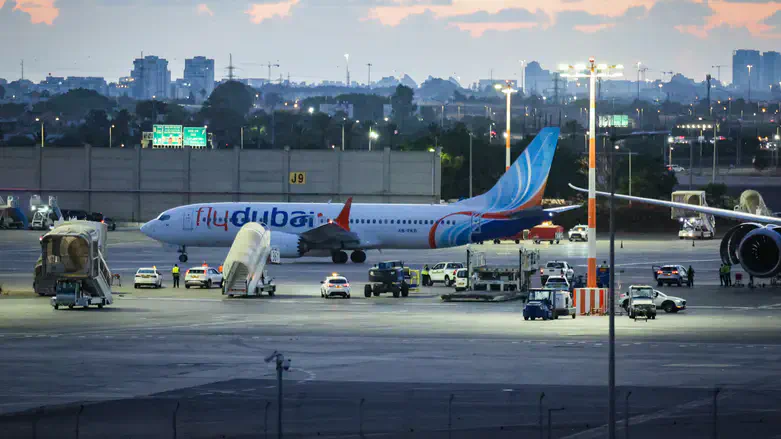
Israeli authorities are investigating whether the terrorist - the co-pilot on a Flydubai flight who attempted to carry out an attack on Wednesday - intended to take control of the aircraft over Jordan and deliberately crash it at high speed inside Israel.
Channel 12 News reported that Shin Bet (Israel Security Agency) Director David Zini had warned for months that security arrangements on flights from the UAE were insufficient.
According to the report, a major dispute arose in the weeks leading up to the incident between the Shin Bet and Israeli airlines over a flight ban the agency had imposed on a UAE route due to security concerns. Zini’s demand for enhanced security measures could have been relevant in this case and potentially helped thwart the attempted attack.
While the Shin Bet is responsible for security on Israeli airline flights, the Mossad handles threat prevention for foreign carriers. Although intelligence indicated a sharp rise in attack warnings, primary concerns centered on other scenarios, such as missile fire or airport ground attacks. A scenario like the one that unfolded Wednesday morning was not raised in any official discussions.
Last July, the Shin Bet notified Israeli airlines that flights to Dubai would be prohibited until the end of October. The decision was made amid heightened regional tensions and concerns over a possible escalation with Iran.
Following the incident, Flydubai announced Wednesday evening that it is suspending flights to Israel for six days. Concurrently, El Al and Arkia stated they plan to resume flights on the route in November under heightened, stringent security measures.