

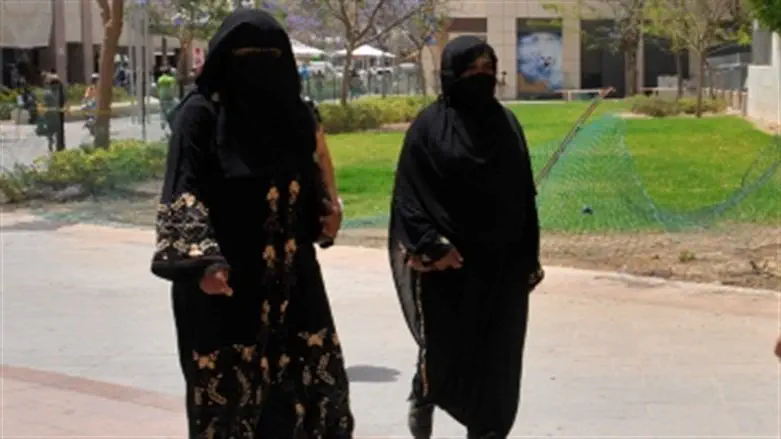
The Italian government approved a decree law on Thursday banning burqas and niqabs in schools and introducing a 30% limit on students in each class who do not have an adequate command of Italian, AFP reported.
"It introduces "A 30 percent cap on the number of students in a class who do not have an adequate command of Italian, more tools for learning our language, and a ban on the burqa and niqab in schools," Italian Prime Minister Giorgia Meloni wrote on social media.
The measure also requires parents to take part in free Italian-language classes if their child faces serious difficulties integrating into school. Failure to comply with the requirement could result in a fine of up to 1,000 euros.
A 30% ceiling on foreign students in individual classes has existed since a 2010 ministerial memorandum, although authorities have been able to adjust the threshold. Classes could exceed the limit when foreign students had sufficient Italian-language skills, while the threshold could also be lowered when students struggled with the language.
The government also framed the face-covering ban as a security measure. "The burqa ban was "a matter of security"," Meloni said in a television interview following the cabinet meeting.
"When a woman -- or worse, a young girl -- is forced to cover her face, she is being denied fundamental rights and the very integration that is so often loudly championed," she said.
The measures have drawn criticism from the opposition and child welfare groups. Save the Children warned that moving children to different schools or separating them from their peers because of nationality or limited Italian proficiency would "create 'first-class' and 'second-class' students".
Opposition leader Elly Schlein accused the government of "a new witch hunt at the expense of children".
Italy has made migration and integration central political issues ahead of next year's general election. A campaign to prohibit burqas in schools was launched in July by the National Future (FN) party, which is outside the governing coalition and positioned further to the right than Meloni's party.
Italy's move follows restrictions on face coverings adopted elsewhere in Europe. France became the first country in 2010 to prohibit burqas and niqabs in public spaces, approving the measure by a 335-1 parliamentary vote. Belgium's parliament began the process of adopting a similar prohibition that year.
Denmark enacted a ban in 2018 covering garments that conceal the face, including the niqab and burqa. Swiss voters narrowly approved a public face-covering ban in 2021.
In October 2025, Portugal's parliament approved legislation prohibiting face veils worn for "gender or religious motives" in most public spaces. The legislation provides for fines of €200 to €4,000, while anyone convicted of forcing another person to wear a face veil could face up to three years in prison.
In December 2025, Austrian lawmakers also voted by a large majority to prohibit headscarves in schools for girls younger than 14.