

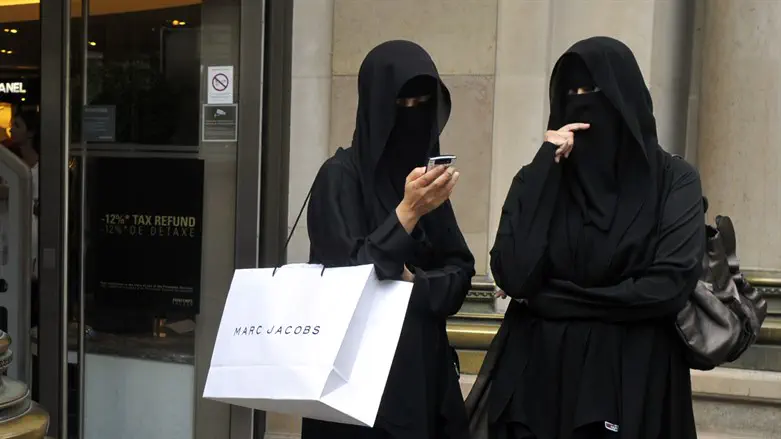
Italian Prime Minister Giorgia Meloni announced Sunday that her government is preparing measures to prohibit burqas and niqabs in schools and introduce a maximum number of foreign students permitted in each classroom.
Speaking at Fenix, an annual event organized by Gioventù Nazionale, the youth movement of her right-wing Brothers of Italy party, Meloni said the measures would soon be brought before the Cabinet.
The proposed rules would also require parents of foreign students who experience serious difficulties integrating into the Italian school system to learn Italian.
Meloni did not say what limit the government intends to establish for the number of foreign students in individual classes.
Explaining the proposed measure, Meloni argued that a student who does not speak Italian can more easily learn the language when surrounded by Italian-speaking classmates and teachers. When a large proportion of a class does not understand Italian, she said, the conditions needed for integration are undermined.
"Italian children cannot feel like a minority in the classroom," Meloni said, adding that Italian students should not find themselves marginalized because they have become a minority in their own class.
Students without Italian citizenship currently make up 11.6% of pupils enrolled in Italian schools, according to the Fondazione ISMU research institution.
Meloni also announced plans to prohibit the wearing of burqas and niqabs in schools.
"You must go to school with your face uncovered," she said, adding that traditions should not be invoked to require young women to conceal themselves.
During her remarks, Meloni stressed that equality between men and women is "not negotiable," either in schools or in public spaces.
The Prime Minister also addressed vocational education, announcing that the government intends to allow technical and vocational institutions to use the designation "liceo." Meloni said the change was intended to emphasize that such schools and their students have equal value.
Turning to social media, Meloni said platforms should bear much of the responsibility for addressing mechanisms that can cause addiction among younger users. She rejected claims that her government had blocked a bipartisan proposal restricting social media use among children, saying the government had refrained from intervening because Parliament was already discussing the issue.
Meloni said restrictions would need to be practically enforceable and questioned how platforms could verify users' ages without requiring people to provide identification.
She also addressed the approaching election campaign, urging her audience not to automatically accept everything they see in the coming months, particularly material appearing shortly before voting, and emphasizing the importance of distinguishing between authentic and artificially created content.