

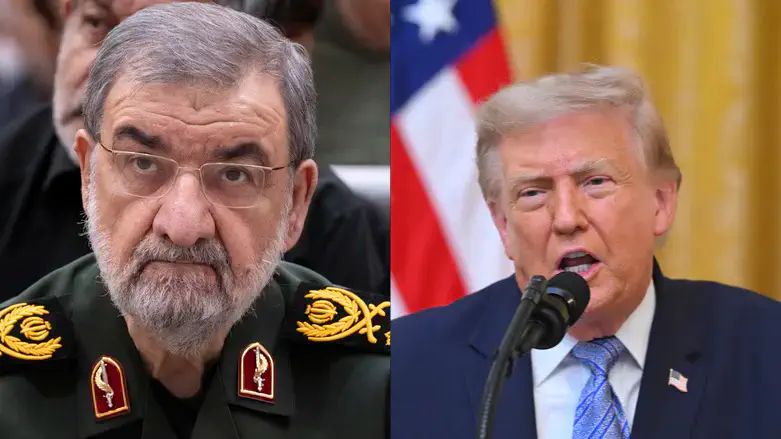
Iran has conveyed seven conditions to Washington for resuming negotiations, according to Supreme National Security Council Secretary Mohsen Rezaei, as US President Donald Trump considers whether to launch another major military campaign against Tehran.
“The United States, if it wants to extricate itself from the predicament it has created, must accept Iran’s rights and conditions," Rezaei wrote on social media on Saturday, saying the demands had already been passed to Washington. He did not publicly detail all seven conditions.
In an interview with Al Jazeera, however, Rezaei identified three of Tehran's demands: an end to the war “on all fronts," the release of frozen Iranian funds and the lifting of the US naval blockade. He said Qatar had conveyed the conditions to Washington and that Iran was waiting for Trump's response.
The two countries have continued indirect diplomatic contacts despite months of fighting and the collapse of the Islamabad memorandum of understanding. The agreement, reached following Pakistan-hosted talks in June, was intended to stop the fighting and establish a framework for a broader settlement.
Both sides later accused each other of violating its terms, and the memorandum expired in August without producing a lasting agreement.
Rezaei also adopted a more confrontational tone in discussing Iran's military posture. He said Tehran changed its approach toward Washington after the US withdrew from the memorandum, and claimed Iran had tested an anti-ship missile near an American aircraft carrier. He also said Iranian forces were better prepared for US air attacks after identifying weaknesses in the American military.
Regarding Iran's nuclear policy, Rezaei claimed Tehran continues to adhere to late Supreme Leader Ali Khamenei's fatwa against nuclear weapons and has not altered its nuclear doctrine, while adding that “we do not know what will happen in the future."
He also said Israeli and US actions had already given Iran grounds to leave the Nuclear Non-Proliferation Treaty, although Tehran has not decided to do so. According to Rezaei, any such decision would depend on Washington's future conduct.
Trump told Axios Thursday that he faces a major decision over whether to resume large-scale attacks on Iran.
“I have a big decision coming up. Do I want to go in and annihilate [the Iranian regime] or do I not? It's a big decision. Anything could happen with me," he said.
In a subsequent Fox News interview, Trump said Tehran wants an agreement but is not yet prepared to reach one.
“Iran wants to make a deal. They’re not ready, in my opinion," Trump said. “They’re going to either make a deal that’s good, or we’re not going to make a deal at all."
Trump also said US B-2 bomber strikes had deprived Iran of the ability to move toward developing a nuclear weapon. Without the operation, he said, Iran would now possess such a weapon “and they would use it. They would use it very easily."
The President is expected to meet with leaders or foreign ministers from the six Gulf Cooperation Council countries - Saudi Arabia, the United Arab Emirates, Qatar, Bahrain, Kuwait and Oman - in New York this coming Tuesday on the sidelines of the UN General Assembly. The Iran war and Washington's plans for the next stage of the conflict are expected to be central topics.