

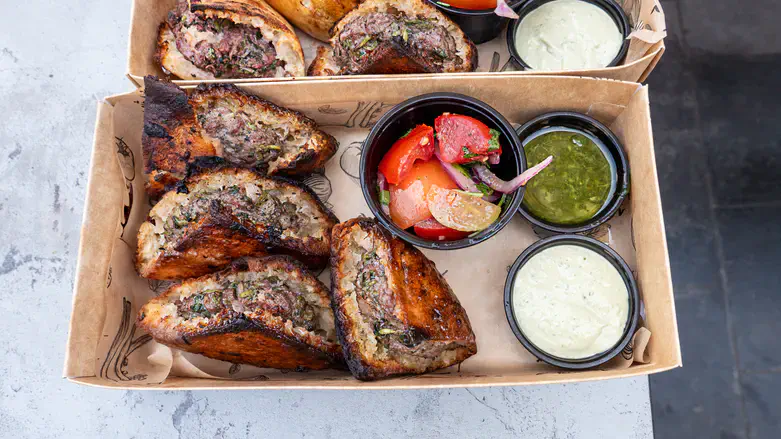
An Israeli-owned restaurant in New York City has found itself at the center of an online controversy after adding arayes to its menu, prompting accusations from pro-Palestinian activists that it was appropriating Arab and Palestinian cuisine.
Shifka, a Mediterranean pita restaurant located at 324 Bowery in Manhattan, recently added an “Arayes Burger" to its menu, consisting of beef, caramelized onions and tahini-yogurt.
According to a report by Al Araby TV, a video published by the restaurant promoting the dish sparked criticism on social media, with users accusing the Israeli-owned establishment of “stealing" another Arab dish.
Al Araby presented the controversy under the headline, “‘Stealing another dish’: Israeli restaurant in New York adds arayes to its menu, sparking outrage," placing the dispute within the broader debate over the origins and national identity of foods eaten throughout the Middle East.
Shifka, however, does not identify the arayes burger as an Israeli dish on its menu. The restaurant describes its cuisine more broadly as Mediterranean street food.
Its current menu lists the Arayes Burger for $18 alongside dishes reflecting a range of regional influences, including falafel, lamb kebab, harissa chicken, a Tunisian malawach sandwich, muhammara, labneh and babaganoush.
Shifka opened on October 14, 2025, and was created by the team behind Sami & Susu, a Mediterranean restaurant and wine bar on Manhattan’s Lower East Side.
One of Shifka’s owners, Amir Nathan, was born and raised in Beersheba, Israel, and has previously spoken openly about both the Israeli identity of the restaurant and the wider culinary influences behind its food.
In an interview published shortly after Shifka opened, Nathan stressed that the restaurant’s cuisine should not be understood as exclusively Israeli.
“Obviously, I’m from Israel but the influences are from all around," he said, pointing to dishes combining traditions from different parts of the region. “It is not just Israeli."
Nathan said that he and executive chef Jordan Anderson traveled through Israel while developing Shifka’s menu, visiting traditional pita shops as well as Arab restaurants and the ASIF Culinary Institute. Their trip also included hummus in Acre and a visit to a Druze restaurant in northern Israel.
Nathan has described Shifka’s food as reflecting the varied culinary traditions found in Israel and throughout the Jewish Diaspora.
“I call it Mediterranean because it is actually not meant to be just Israeli but food of the Diaspora," he said in the earlier interview.
The restaurant’s Israeli and Jewish identity has previously attracted hostility. Nathan said that Sami & Susu was vandalized during the war following the October 7 attacks, with graffiti sprayed on its windows.
At the same time, he said the restaurant experienced an increase in Jewish customers following October 7.
“More Jews are coming to Sami & Susu after Oct. 7," Nathan said.
Despite the latest controversy, Shifka is preparing to expand beyond its Bowery location. The restaurant has been selected as one of the food businesses set to open at The Market Hall, a new 34,000-square-foot dining destination at Manhattan West scheduled to open in the fall of 2026.
The dispute over arayes is the latest example of a long-running debate surrounding the national and cultural identity of Middle Eastern foods, including hummus, falafel and other dishes consumed across Israel and the Arab world.
While critics have portrayed Shifka’s addition of arayes as another example of Israeli appropriation of Arab cuisine, the restaurant itself presents its menu as a mixture of Israeli, Jewish, Arab and broader Mediterranean culinary influences.