

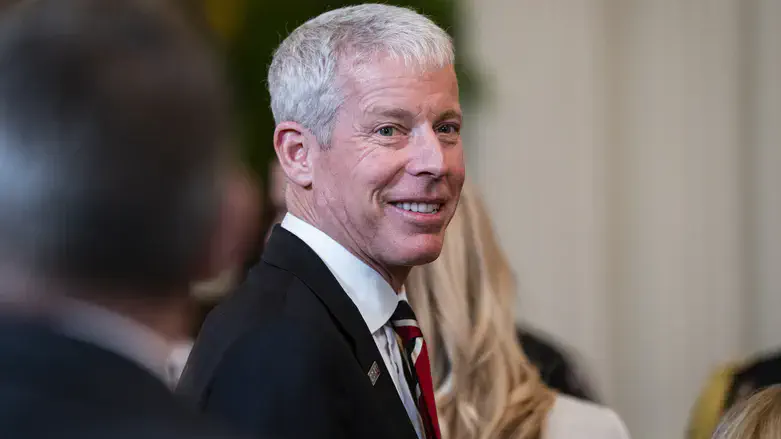
The United States may ultimately prevent Iran from developing a nuclear weapon without reaching a negotiated agreement with Tehran, US Energy Secretary Chris Wright said Sunday as the conflict between the two countries entered its seventh month.
“There may not be a nuclear agreement. It may be simply destroying their capabilities to do it," Wright said on ABC News’ “This Week." “An agreement may await the next administration in Iran. We simply don’t know that."
Wright's comments indicate that the Trump administration could continue pursuing the destruction of Iran's nuclear capabilities rather than relying on a diplomatic agreement to prevent Tehran from acquiring nuclear weapons.
President Donald Trump has repeatedly identified stopping Iran from obtaining a nuclear weapon as a central goal of the US campaign. At the same time, he has continued seeking a negotiated agreement with Tehran during the war, which has driven energy prices higher around the world.
Asked whether the administration would continue military strikes if Iran attempts to rebuild its nuclear infrastructure, Wright said, “You have to destroy their capabilities to do it."
“We are degrading their capacity to develop nuclear weapons and ultimately to deliver them if they develop them," he said. “It is a 47-year-long effort. This is not trivial, but the United States will get the job done and we will work in cooperation with our allies in the region."
Wright later addressed the issue again during an appearance on CBS’ “Face the Nation," emphasizing that Trump still favors diplomacy when possible.
Wright said the president’s preference “is always to have a negotiated settlement and not use a military solution unless absolutely necessary."
He also described the US military's current economic objective in the region as restricting Iran's energy exports.
“The biggest role of our military in the region right now is to stop the export of any Iranian crude or crude-related products, natural gas, whatever," he said. “We are strangling their economy to try to bring either a change in policy from the existing regime or a new regime."
Wright’s comments come as Washington has intensified its economic campaign against Tehran. The US Treasury Department launched “Operation Economic Outcast" last week, with Treasury Secretary Scott Bessent describing it as an unprecedented campaign aimed at isolating Iran economically and cutting off revenue available to the Iranian regime.
The economic pressure has accompanied renewed US military action against Iran. American strikes resumed this past week, hitting targets around Qeshm Island, Chabahar and Bandar Abbas, near the Strait of Hormuz.
On Friday, three days after the US strikes, President Donald Trump warned that American forces could soon target Pickaxe Mountain, a heavily fortified Iranian facility where Tehran has allegedly been expanding its nuclear infrastructure.
Trump reiterated in the Oval Office that Iran would not be allowed to obtain a nuclear weapon.
"Iran will not have a nuclear weapon," he said, before adding, "We may hit Pickaxe very soon...if there was anything going on with Pickaxe."
Trump had previously said he did not expect the renewed confrontation with Iran to continue for much longer.
Asked how long the latest escalation would last, Trump responded, “Not too long". He subsequently suggested that Iran could have limited ability to withstand continued American attacks.
“I don’t think it will be very much longer. I don’t know how much more they can take," Trump said of Iran.