

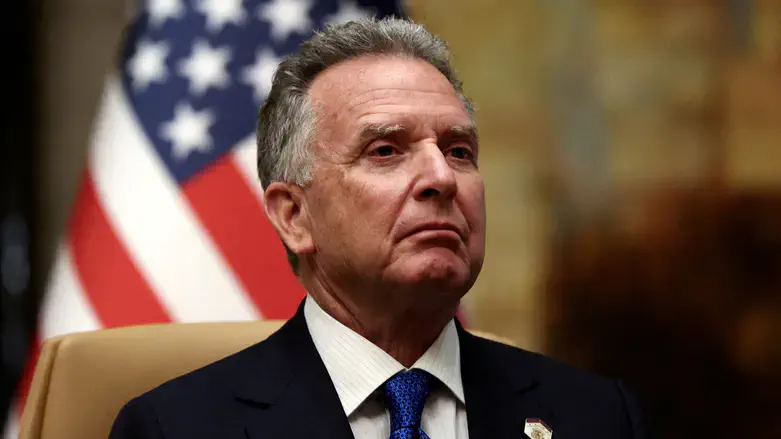
White House envoy Steve Witkoff held an undisclosed meeting last weekend with United Arab Emirates National Security Adviser Sheikh Tahnoon Bin Zayed al Nahyan to discuss the next steps in the Iranian crisis, according to two sources familiar with the talks who spoke to Axios.
The meeting, which had not previously been reported or announced by the White House, took place on the Mediterranean island of Sardinia as the Trump administration works to restore shipping through the Strait of Hormuz while increasing economic pressure on Tehran.
The UAE has emerged as a key partner in the US-led effort to reopen the strait and facilitate the passage of oil tankers. Abu Dhabi is also considered important to the administration's campaign to economically pressure Iran.
Sheikh Tahnoon, widely known as TBZ, is among the UAE's most influential officials. He is the brother of UAE President Mohammed bin Zayed, serves as the country's national security adviser and deputy ruler of Abu Dhabi, and oversees the country's extensive investment and technology interests.
According to the sources who spoke to Axios, Witkoff and TBZ discussed possible next steps in the Iranian crisis as well as other matters. The White House did not respond to Axios' request for comment.
The meeting came just days after Treasury Secretary Scott Bessent unveiled "Operation Economic Outcast," a campaign targeting countries and entities that conduct business with Iran with potentially severe sanctions.
A source familiar with the matter told Axios that Bessent spoke with TBZ before the announcement.
On the same day as Witkoff's meeting, the Treasury Department took steps to exclude the UAE branches of Egypt's Banque Misr from the US financial system over their dealings with Iran. The proposed measure would prevent the branches from conducting dollar transactions.
The UAE central bank said it would carry out an "urgent examination" of transactions between the Egyptian bank's branches and Iran.
The UAE had itself taken a major step against Iran several days before the US sanctions announcement, deciding to suspend all trade, commercial exchanges and financial transactions with Tehran.
The decision marked a significant shift because Dubai and the wider UAE have traditionally served as major trading and re-export centers for Iranian commerce. Bilateral trade between the UAE and Iran totaled $28 billion in 2024.
A second source familiar with the issue told Axios that Emirati officials had informed the Trump administration that an economic campaign against Iran would only succeed if it covered all major countries conducting trade with the Islamic Republic.
Bessent said Tuesday that Washington intends to further tighten the economic squeeze on Tehran until it agrees to a peace deal with President Donald Trump. He said the campaign would also target Iranian assets abroad that are linked to the Islamic Revolutionary Guard Corps (IRGC).
Speaking before meetings with G20 finance ministers in Asheville, North Carolina, Bessent said US authorities are working to identify and freeze Iranian assets overseas, including accounts in the British Virgin Islands and expensive properties around the world.
“We are going to economically asphyxiate this regime," Bessent said during a discussion moderated by economist and Fox Business Network host Larry Kudlow, as quoted in The New York Post.
“My job is to make sure that they want to have a deal, and they will want to have one," he added.
Bessent said the Treasury Department has been tracking assets connected to the IRGC and warned that the United States intends to target them.
“We are tracking down the IRGC’s assets, and I will say it on worldwide TV, just so you know: We know where in the British Virgin Islands your accounts are at these trust companies," he stated.