

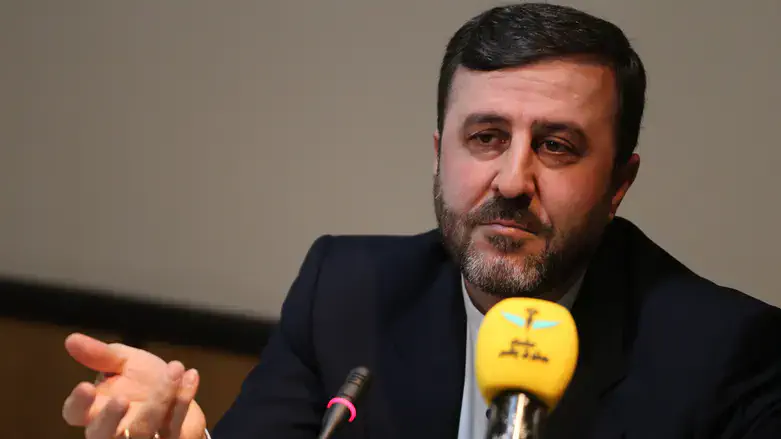
Iranian Deputy Foreign Minister Kazem Gharibabadi said Tuesday that Tehran considers itself to still be at war and warned that the Strait of Hormuz will not reopen until several conditions are met.
"We are still in a state of war, and the Strait of Hormuz will remain closed," Gharibabadi said, in comments quoted by Iranian media, while stressing that reopening the strategic waterway would require an end to the conflict on all fronts, the lifting of the blockade and a resolution of the situation in Yemen.
"The reopening of the Strait of Hormuz will only happen in exchange for ending the war on all fronts, lifting the blockade, and resolving the situation in Yemen."
He also linked the reopening of the strait to commitments made by Washington under the memorandum of understanding signed by the sides in June.
"We told Pakistan's Army Chief that reopening the Strait of Hormuz depends on America fulfilling its commitments under the memorandum of understanding."
Gharibabadi further warned that Iran could take military action before being attacked.
"Why should we always wait for America to attack? We can take preemptive action."
His comments came after US President Donald Trump said earlier Tuesday that the US Navy had cleared all mines from the international waters of the Strait of Hormuz.
"I have just been informed by the United States Navy that all mines have been removed and/or detonated from within the International Waters of the Strait of Hormuz. Iran has been notified that any ship or boat placing new mines will be immediately and systematically destroyed," Trump wrote on Truth Social.
He added, "Through Space Force, we are watching every square inch of the Strait, as we are, also, with Pickaxe Mountain and the already destroyed three other Nuclear sites. There is a Zero Tolerance policy on mine placement in full force and effect."
Meanwhile, Pakistan said its efforts to mediate amid the confrontation between Iran, the United States and Israel had made progress.
Pakistani Interior Minister Mohsin Naqvi said Tuesday that "significant progress" had been achieved during discussions with Iranian officials over the conflict and possible steps toward a settlement.
Naqvi traveled to Tehran alongside Pakistan's army chief, Field Marshal Syed Asim Munir. The two Pakistani officials met with the Iranian president.
"Field Marshal Syed Asim Munir and I had a very positive and productive meeting with the President of Iran," Naqvi said afterward.
He said the talks addressed the Iran-US conflict, wider regional tensions and possible measures for resolving the confrontation, including steps necessary to restore the Islamabad Memorandum of Understanding.
"The Iranian President candidly shared his Government's perspective and concerns, and we had a very constructive exchange on the issues involved," Naqvi stated.
"Significant progress was made, and the meeting concluded on a highly positive note. We remain hopeful that this momentum will help pave the way for further progress and lasting peace in the region," he added.
Pakistan's military said the discussions also covered preventing additional escalation, reopening the Strait of Hormuz, accelerating an end to the conflict and the possibility of reaching a negotiated settlement.
At the same time, Washington has begun a sweeping economic campaign against Tehran. The US has launched "Operation Economic Outcast," aimed at isolating Iran financially and cutting off revenue streams available to the Iranian regime.
US Treasury Secretary Scott Bessent announced the initiative Monday, saying the administration would target Iran's economic links worldwide. The campaign covers sectors including petroleum, transportation, banking, shipping, aviation, digital assets, technology and gold.
Bessent warned governments, financial institutions and other entities that continue facilitating Iranian economic activity that they could face US measures, including secondary sanctions and exclusion from the US dollar system.
Iranian Economy Minister Ali Madanizadeh said in response that Tehran had anticipated the pressure and prepared a two-year plan for dealing with the economic campaign. Gharibabadi, meanwhile, argued that Washington's decision to escalate economic pressure showed that the United States had failed to accomplish its objectives through military action.