

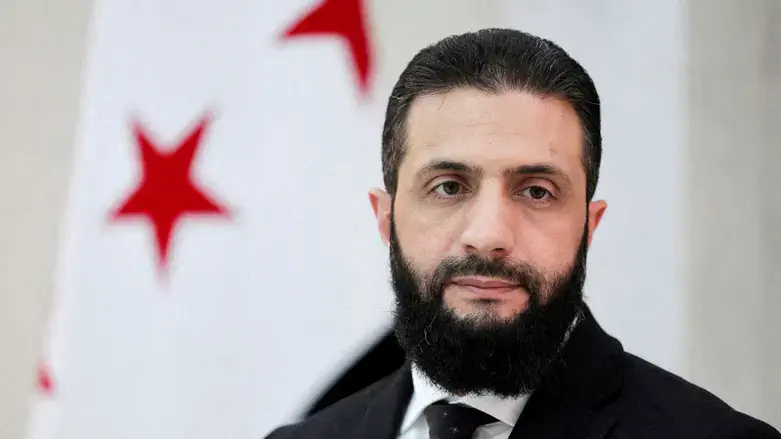
Syrian Foreign Minister Asaad al-Shaibani announced at a joint press conference with International Atomic Energy Agency (IAEA) Director General Rafael Grossi that Syria will allow access to a site in Deir ez-Zor as part of an agreement to hand over nuclear material that has remained in the country since 2007.
"Syria is allowing access to the site in Deir ez-Zor after more than 18 years. We have a sovereign and legal right to use atomic energy for civilian purposes," he said.
The remarks also constitute Syrian confirmation that nuclear material remains in the country's possession. About a week ago, it was reported that the Trump administration had reached secret understandings with Israel and Syria under which the IAEA is expected to remove nuclear material being stored at a secret site in Syria.
American and Israeli officials told Axios that the arrangement was formulated after months of behind-the-scenes contacts amid concerns about an escalation surrounding the sensitive site. The talks were intended to ensure the security of the material and prevent a possible confrontation between Israel and Syria, alongside concerns about Turkish involvement in the affair.
At the center of the affair is a facility known as "Site 99," which Israel has been monitoring for the past two years. According to two Israeli sources, the Assad regime stored nuclear material there that was connected to the al-Kibar reactor project, including remnants of nuclear material from the reactor that Israel bombed in 2007.
A senior American official said that the site contains, among other things, "yellowcake" - a powder produced from uranium ore and used at one stage of the nuclear fuel cycle. According to the official, "residue" and other nuclear materials left over from the al-Kibar project were also stored at the site.
According to the report, the material at the site is not suitable for producing a conventional nuclear weapon, but it could be used for a "dirty bomb" - a conventional explosive device designed to disperse radioactive material. Israeli officials claimed that Israel had even threatened to strike the site again if the material was not removed or if it became clear that Syria was attempting to gain access to it.
The United States and Israel ultimately concluded that they should seek the consent of Syria's new government for the removal of the material. According to American officials, when the issue was presented to the Syrians, they claimed that they had not known the material was there at all.