

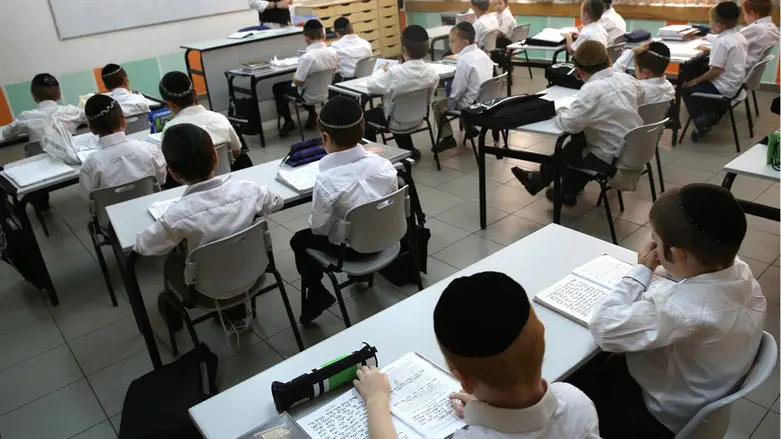
At a time when the issue of core curriculum studies and government sanctions is at the center of public and legal debate, the haredi education system is facing a severe shortage of teachers, alongside a drop in the status of the teaching profession within the Lithuanian-haredi community.
During a discussion on Channel 12 News, haredi commentator Yisrael Cohen noted that in recent years there has been a certain increase in the amount of English and mathematics taught in haredi educational institutions.
However, he clarified that these steps do not provide a comprehensive response to the State's requirements regarding standardized testing and the core curriculum, and that government measures are often perceived as merely buying time.
According to Cohen, the shortage of skilled personnel in educational institutions, particularly in the independent haredi system and institutions affiliated with the Lithuanian-haredi community-stems from a combination of economic and social factors.
Alongside salaries that in practice sometimes fall below the figures publicized online, there is also a significant issue of social status. Among young men in the Lithuanian-haredi community, leaving a yeshiva to work as a teacher in an educational institution is sometimes viewed as less prestigious than continuing yeshiva studies or teaching in a yeshiva.
Meanwhile, a special gathering was held recently under the leadership of yeshiva dean Rabbi Moshe Hillel Hirsch, focusing specifically on how to encourage married yeshiva students and young men leaving yeshuva to join the education system teaching religious subjects.
To this end, various proposals were raised aimed at improving the professional and social standing of educators and presenting classroom teaching as an important educational mission that is valued by the community.