
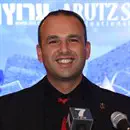

Religious Zionism party chairman and Finance Minister Bezalel Smotrich launched the “Reservists Home" plan on Thursday evening, aimed at significantly reducing the burden of service on IDF reservists.
The plan was presented at an event launching the party’s reservist campaign headquarters, attended by hundreds of reserve soldiers and officers who expressed support for Religious Zionism ahead of the upcoming elections, including officers holding the ranks of lieutenant colonel and colonel.
Smotrich has set a goal of reducing reserve service to 30 days per year as early as 2027. The principle presented by the party is to expand the number of people serving so that each individual can serve for less time, rather than continuing to rely over the long term on the same group of reservists.
Smotrich argued that there is a gap between the growing number of missions and sectors that the IDF is required to defend and the size of the forces available to it. According to the plan, this gap should be addressed by expanding the manpower pool and making better use of existing forces, rather than extending the service of the same reservists and active-duty soldiers.
The first component of the plan deals with expanding the reserve force and reducing the number of days each reservist serves. Smotrich proposes immediately returning some 50,000 soldiers who are not currently assigned to active reserve units, establishing new reserve formations, and improving soldiers’ operational readiness, alongside a more balanced distribution of security missions.
The second component is a national plan for the enlistment of haredim. It includes establishing and funding pre-military preparatory academies, haredi hesder yeshivas, and other programs preparing recruits for military service, alongside an expansion of the state-haredi education system.
The plan also proposes establishing additional dedicated service tracks that would enable soldiers to maintain their haredi way of life, as well as providing support for haredi combat soldiers and their families through grants and incentives, establishing soldiers’ homes, and strengthening nonprofit organizations active in the field.
The third component is the enactment of a “Basic Law: Those Who Serve," under the principle defined by the plan as “first in equality." Under the proposal, the status of active-duty soldiers and reservists would be enshrined in a Basic Law, and they and their spouses would receive priority in housing, daycare centers, higher education, student housing, and admission to the civil service.
Smotrich declared that implementation of the plan would be a condition for Religious Zionism to join the next government. He said that the prolonged war has changed Israel’s security reality, creating a situation in which there is more territory to defend and more missions to carry out, while fewer forces are available.
According to Smotrich, the solution is not to repeatedly call up the same reservists and keep them away from their homes for hundreds of days, but rather to expand the pool of those serving and make better use of the manpower already available to the IDF.
He added that distributing the burden among a larger number of servicemembers is intended to enable the continued fulfillment of Israel’s security missions while allowing reservists to return to their families, their jobs, and their normal lives.