
Lt. Avi Tenenbaum MA is the founder of Tekuma (www.tekumarise.org), which provides free crisis stabilization and support to individuals and families during the first 30 days following tragedy and highly traumatic events. He also voluntarily commands the Israeli Police Jerusalem-Beit Shemesh Internal Psychotrauma Unit and previously served as National Director of the UH Psychotrauma and Crisis Response Unit.
Therapy matters, but a nation cannot outsource human presence to therapists.
As we mark three years since October 7, 2023, Israel is once again speaking about the people we lost, the hostages, the wounded, the displaced families and the soldiers who have carried the burden of an extraordinarily long war. Ceremonies are held and stories are told, as we try to understand the cost of what happened to us.
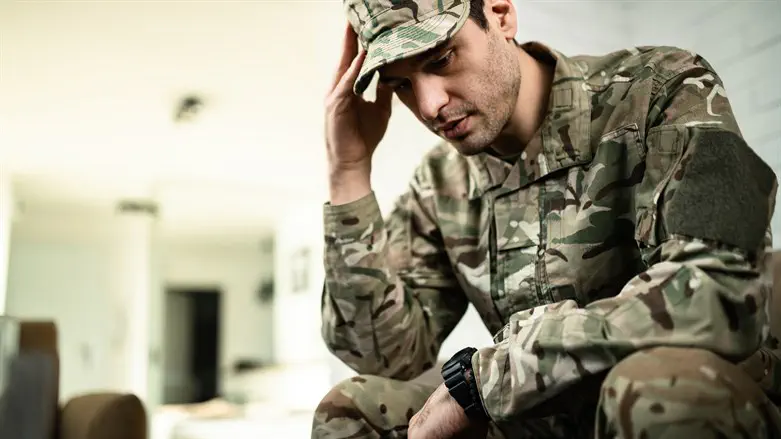
Some of the deepest ongoing costs are borne by IDF reservists who have given so much since October 7, 2023, and are now struggling with PTSD, alongside dwindling emotional, social, and financial resources. Some are losing their will to live.
The burden of these IDF soldiers with PTSD often manifests as survivor’s guilt, sleeplessness, anger, isolation, financial pressure, damaged relationships, suicidality, flashbacks, and intrusive thoughts and smells. Sometimes the struggle is visible to us. Often it is hidden behind a deflecting joke or a polite, protective “I’m fine."
I had PTSD some years ago, and let me testify that it is a living hell on this earth. There’s no way to sugarcoat it. PTSD can be devastating, but recovery is possible, and nobody should have to pursue it alone.
Evidence-based professional trauma therapies can reduce trauma symptoms, restore functioning, and save lives. I believe deeply in therapy. Many people need it, and more must have affordable access to it, without shame or prohibitive waiting times.
But we cannot rely too heavily on professional therapy as our national answer to suffering.
As an expert in Disaster Behavioral Health and resilience, I have helped support thousands of people following terror attacks, sudden deaths, suicides, road accidents, fires, and other tragedies. Again and again, I have learned something both simple and profound: healing does not happen only in a therapy room. Sometimes the most important help begins when another human being shows up.
It may be a friend who takes someone for coffee and does not pressure him to talk. A neighbor who notices that a woman has stopped leaving her home. A relative who invites a struggling soldier to walk in nature. A member of a synagogue who realizes that someone has been missing and makes a five-minute call: “I noticed you haven’t been around. I just wanted to say hello and see how you are doing?"
My workload in trauma response and security after October 7 left me too exhausted to attend my regular shul for nearly 11 months. Instead, I went to an ‘express’ minyan on my corner. During that time, nobody from my regular shul called to ask where I was. Several people warmly asked about my absence when I returned almost a year later. I believe they cared. But care that only waits for someone to return 11 months into the year may arrive too late to help them get through a crisis.
Often people do care, but they remain silent because they are busy, afraid of intruding, saying the wrong thing, or opening pain they do not know how to handle.
I share this because it raises a question larger than my own experience: if someone struggling with PTSD disappears from community life, will we notice and reach out-or wait for them to come back on their own?
We must be doing outreach. We must project genuine care. We must be inviting. We must be friendly. We must be nonjudgmental.
We’ll pick up the phone or compose a WhatsApp message and simply say: “Hey, I just wanted to check in and see how you’re doing, because I care about you. You can answer anything. I’m here."
In my work, I have seen how checking in and showing up can help people hold on through terrible agony. This is how my friends helped keep me alive when I battled PTSD: by being there with me. And of course, when someone is at risk of suicide, that presence must go hand in hand with steps to keep them safe and connect them with professional help.
There is a condition necessary to make this all work: You must really care. You must really love your friend and let your words convey that message in between your words. Lip service won’t work.
This is not therapy, and we should not pretend that it is. It is human presence. It is the message: You are not invisible. You do not have to carry this struggle alone. You are not a burden. You are valuable to me. I want to walk alongside you as you face this.
There is an important difference between trying to cure another person’s pain and helping that person carry it. Too often, when we encounter suffering, we rush to fix it. We offer unsolicited advice, search for the perfect professional, tell them they must have faith, or we avoid the person entirely because we are afraid of saying the wrong thing.
Not every wound can be quickly repaired. Some losses cannot be “solved" at all. People may need professional treatment, but they also need companionship while they learn to live alongside what happened. They need family, friendship, community, spirituality, nature, meaningful hobbies, support animals, hope, inspiration, and opportunities for post-traumatic growth. Most importantly, they need ordinary people who are willing to remain present without demanding that the pain disappear.
For someone living with guilt, despair, intrusive or suicidal thoughts, this small act may matter far more than the caller realizes.
I founded Tekuma to help individuals, families, and first responders through the first 30 days after highly traumatic events and tragedies. Although we are not a dedicated service for soldiers, we regularly receive calls from soldiers and their families. Those conversations have taught me that even when professional services exist, people can still struggle to find the help they need, or feel alone between appointments. NGO’s, friends, relatives, and communities all have a role to play in this.
For some soldiers, a pause in fighting or a return home brings another struggle into focus: confronting the trauma they carry, the disruption to their personal lives, and the financial pressures of prolonged service.
Among the soldiers who contact us, some have lost jobs or income because of prolonged service, trauma symptoms, or both. Some are also struggling with strained family relationships, leaving them with less support precisely when they need more. A few struggle to afford groceries. How can we expect someone to focus on recovery while worrying about feeding their family?
Many soldiers with PTSD receive treatment through government-funded services, and eligible applicants can receive psychological care while their recognition claims are being processed. Yet some soldiers we encounter hesitate to apply because they fear the consequences of formal recognition. Others seek help through NGOs or private care. Available services do not always translate into help that a person feels able to access.
Even when soldiers find appropriate treatment, some struggle between sessions with intrusive thoughts, isolation, and unstructured time. They seek routine, companionship, and connection with others who have been through similar experiences. Other soldiers with PTSD push on in their service despite tremendous emotional burdens, using constant activity and avoidance to keep painful emotions and intrusive traumatic memories at bay. This tactic catches up with them at some point and our soldiers hit a breaking point.
No government service or professional treatment system, however well-funded and accessible, can replace the daily support of friends, relatives, neighbors, employers, and communities. We all need to take an active role in this battle.
The principles are not complicated:
- Notice changes and absences from the people and IDF veterans in your life and community.
- Reach out simply and directly. Be genuine. Lip service won’t work. You must care.
- Ask how somebody is doing. Be proactive. Listen. Hear what people say.
- Do not offer instant solutions or unsolicited advice.
- Make contact manageable: a short call or walk may be enough. Let the person you’re checking in with tell you what is right for them.
- If someone appears to be in immediate danger from suicide, take it seriously and involve emergency or professional support.
- Follow up. One sincere conversation matters; continued presence matters even more.
Call people. Sit with them. Walk with them. Invite them for coffee. Do not force a conversation and do not try to repair everything. Simply let them know: “I see you. I care about you. You do not have to carry this alone."
That is not a substitute for therapy. It is our community’s non-professional responsibility to notice and reach out. Checking in with soldiers and others who are struggling may help restore their willingness to keep living.
I commit this year, bli neder, to use the personal and organizational resources at my disposal, to notice more IDF soldiers with PTSD and see if and how I can be useful to them in their journey. At the very least, but no small matter, I’ll try to walk alongside them as they trudge uphill towards healing.