
The teachings of Chassidut have revolutionised many aspects of Jewish life and observance. Their unique perspectives and deeper understandings have reshaped how we view such things as; Mitzvot, our fellow Jews, the Festivals, our purpose in this world and our relationship with Hashem. Many of these deeper perspectives run counter to how things were historically viewed for centuries.
One of the best examples of this is the nature of the month of Elul and how we approach our Avodah - our Divine service, during this month.
Elul is the last month of the year, a time in which we prepare ourselves for Rosh Hashana and the Days of Judgement. It is a time of Teshuvah and spiritual stock-take. Traditionally the arrival of Elul and its Avodah was a source of trepidation and fear.
Amos the prophet said אריה ישאג מי לא יראה “who is not afraid when the lion roars." The Shala"h taught that the words אריה (lion), is an acronym for אלול, ראש השנה, יום הכפורים, הושענה רבה - Elul, Rosh Hashana, Yom Kippur and Hoshana Rabbah. As days of judgement and awe, these days come like roaring lions, instilling a sense of fear and dread.
In contrast, the Kabbalists refer to the month of Elul as חודש הרחמים, the month of Divine compassion. During this month, G-d’s 13 Attributes of Mercy are manifest. The month of Elul is not a time of distance from Hashem or a time of fear. On the contrary, it is a time of love, compassion and closeness to Hashem. It is a time that despite all that has transpired throughout the year, we can reconnect to Him and He lovingly receives us.
The Ariza"l famously taught that אלול is an acronym for the words of the verse אני לדודי ודודי לי, “I am to my Beloved and my Beloved is to me." Taken from Shir Hashirim, these words describe our relationship with Hashem as one of deep love, not one of fear.
The Baal Hatanya illustrated the nature of the month of Elul with a now-famous parable of the Melech Basadeh, “the king in the field".
When the king is in his palace, in his full glory, radiance and regality, he is inaccessible to the masses. Only unique and prominent individuals can gain audience to see the king, and one needs to be deemed deserving and worthy of this opportunity.
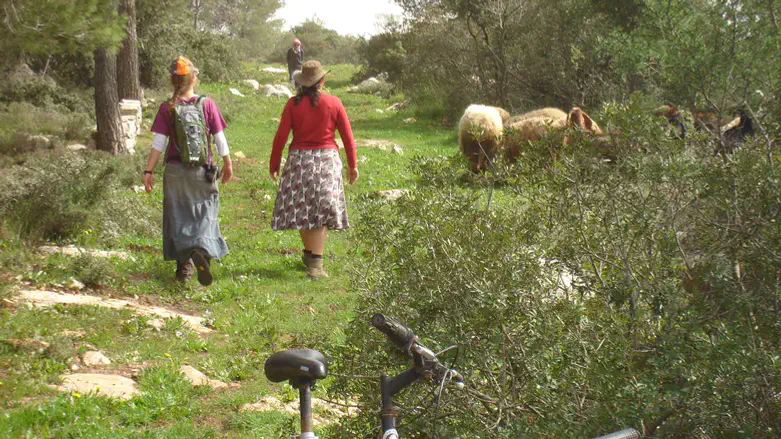
But when the king travels through the fields on his way to the palace, he is accessible to all. The simple workers in the field just need to put down their tools and approach the king. The king does not hold himself distant or aloof. He is in the field with his subjects, in proximity to their daily reality. There are no barriers, and the king is ready to receive everyone, and he does so with a smiling face and joyous countenance.
This metaphor illustrates the presence and accessibility of Hashem during the month of Elul. During this month, Hashem is close and accessible to us. He is present in our day-to-day lives and is ready to receive us with a smiling face and joyous countenance. All we have to do is turn to Him and approach Him.
Hashem is not like a disciplining parent who is waiting to punish us for our wrongs and whom we must fear approaching. Rather, He is a loving parent who is waiting with open arms for us to turn to Him and reconnect.
Whilst a Chiddush in its time, the Alter Rebbe’s parable and understanding of the month of Elul has now become mainstream. We see this in the way Selichot are recited. Traditionally Selichos were a somber affair. Today, in more and more Kehillos, Selichos are filled with music, song and even dancing.
The Gemara already discusses two forms of Teshuvah, Teshuvah out of fear and Teshuvah out of love. Teshuvah performed and motivated out of fear, only has the power to mitigate our intentional sins to become like unintentional sins. But Teshuvah that is approached with love, has the power to completely transform even our intentional sins to become like merits.
In previous generations, only great spiritual giants were capable of attaining the loftier level of Teshuvah MeAhavah. But times have changed.
The Lubavitcher Rebbe taught after all the suffering that we have endured in Exile, particularly in the last century, we are not able to “handle" more negativity and sadness. Whereas in the past, Teshuvah was undertaken with tears, pain, shame and sadness, our generation needs only positively motivated Yiddishkeit, which includes even when doing Teshuvah for our sins.
And as we are getting closer to the times of Moshiach, we are all capable of reaching the lofty level of Teshuvah MeAhavah, even though this was not accessible to everyone in the past.
As we enter the month of Elul and embark on our Teshuvah and preparation for the Yomim Noraim, instead of hearing the lion roar and being afraid, let’s see the King awaiting us in the field with open arms and a smiling face, and approach Him with a Teshuvah that is filled with love and Simcha.