
Dr. Alex Grobman is a Holocaust scholar trained at the Hebrew University in Jerusalem, who directed Holocaust centers in St. Louis and LA. He has written extensively on the Shoah including c-authoring Denying History, Who Said the Holocaust Never Happened? published by the University of California in Berkeley. He is the senior resident scholar at the John C. Danforth Society, a member of the Council of Scholars for Peace in the Middle East and on the advisory board of the National Christian Leadership Conference of Israel (NCLCI).
On August 3, Hamas spokesman Ghazi Hamad explained why Hamas accepted the new Gaza agreement. It acted from “forced necessity" under “hard circumstances," he told Piers Morgan. Hamas had not changed its “mentality." Resistance remained its “holy mission," although it might employ “different tactics, different tools, different methods."
That is not reform. It is a tactical retreat, admitted in Hamas’s own words.
A tactical retreat occurs when a movement accepts what pressure requires, presents the concession abroad as movement toward peace, assures its own constituency that the objective remains unchanged, and preserves the personnel, weapons, money, and command networks needed to resume later.
Intent need not be guessed when leaders state the objective and preserve the means.
The new Gaza roadmap preserves the outline of President Trump’s 20-point plan while gutting the conditions meant to make Hamas’s defeat irreversible. Enforcement is left largely to Palestinian Arab institutions.
It is the same Hamas-PLO playbook: accept an interim arrangement, collect its benefits, postpone the irreversible concessions, and rebuild when Western pressure and attention move elsewhere.
The Doctrine
The PLO’s 1974 Ten-Point Program authorized a “combatant national authority" over any territory obtained while continuing toward “the liberation of all Palestinian territory." An interim gain was not peace. It was a platform for the next stage.
In 2009, a 2001 Arabic-language interview in which senior PLO official Faisal Husseini described the Oslo Accords as “temporary procedures, or phased goals" and a Trojan horse toward all of historical Palestine. In a November 1992 speech to an Arab youth group in Amman, Jordan, Husseini declared, "We have not conceded and will not surrender any of the existing commitments that have existed for more than 70 years ... We have within our Palestinian and united Arab society the ability to deal with a divided Israeli society ... We must force Israeli society to cooperate ... with our Arab society, and eventually dissolve the 'Zionist entity.'"
During the Oslo period, he asserted that their objective was to establish a Palestinian state "from the river to the sea."
Hamas is equally explicit. Its fundamentalist Islamist doctrine makes permanent territorial surrender illegitimate. Its 1988 Covenant declared Palestine an Islamic waqf until Judgment Day. The Covenant invoked a religious text about killing Jews and made the destruction of Israel a religious obligation. Hamas’s 2017 policy document softened the vocabulary but not the objective. It accepted a state on the 1967 lines as an interim national formula while refusing to recognize Israel or abandon “full and complete liberation" from the river to the sea.
Hamas says the concession and its negation openly: take what necessity permits now, surrender no sacred claim, and change tactics without changing the goal.
This record establishes strategic dishonesty, not a misunderstanding between negotiating cultures.
Hamas and PLO leaders use language Western governments interpret as movement toward peace while preserving a contrary doctrine, command structure, and military option. The transaction offers outsiders a symbol they can celebrate-recognition, a unity cabinet, a dissolved committee-while postponing the acts that would make the concession irreversible. The words and offices change. The objective and instruments of power do not.
The Record
The 2011 Cairo agreement promised a consensus government, elections, and unified institutions. Security was postponed to a future committee. Hamas’s armed wing was not dismantled. The government and elections never materialized. Separate security systems survived. The postponement was not peripheral; it removed from the agreement the one issue that determined who actually ruled.
In 2014, Hamas surrendered the cabinet to a technocratic unity government but kept the machinery beneath it. Approximately 40,000 Hamas-hired employees demanded recognition and PA salaries. Hamas-run police remained on the streets. The cabinet changed; the cadres, guns, and chain of command did not.
In 2017, Hamas dissolved an administrative committee and transferred civilian functions and border crossings to the PA. Again, the hard issues were deferred: roughly 40,000 Hamas-appointed employees, many in security, were to be integrated later. Hamas kept its armed wing and weapons. Three months later, Reuters reported that the employee dispute remained unresolved and Hamas still controlled police and internal security.
On the decisive test-one authority, one weapon-each arrangement failed. The sequence was consistent: surrender the office, preserve the organization; transfer the crossing, retain the guns; promise unity, postpone disarmament.
“Later" was the mechanism by which disarmament never occurred.
The Same Playbook Again
In October 2025, senior Hamas official Mohammed Nazzal told Reuters that Hamas would retain transitional security control and could not commit to disarmament: “On the ground, Hamas will be present."
By January 2026, Gaza’s Hamas-run government was seeking to place more than 40,000 civil servants and security personnel into the successor administration, including roughly 10,000 members of the Hamas-run police. It is substantially the same institutional inheritance that defeated the 2014 and 2017 transfers.
On July 6, Hamas dissolved the body overseeing Gaza’s ministries. Yet the ministries and Hamas-appointed staff remained, and Hamas continued to oversee policing where it retained control.
This repeated the 2017 maneuver: remove the label while preserving the system.
Reuters reported in February that an Israeli military assessment warned Hamas was entrenching itself “from the bottom up." Palestinian Arab sources separately described Hamas-linked appointments in government and key ministries. Hamas denied new appointments and a security-service merger, while defending temporary replacements as necessary for continuity. Even accepting those denials, the stated solution preserves the Hamas-built apparatus-the very capability a genuine transition must replace.
The roadmap now protects that Hamas system in four ways.
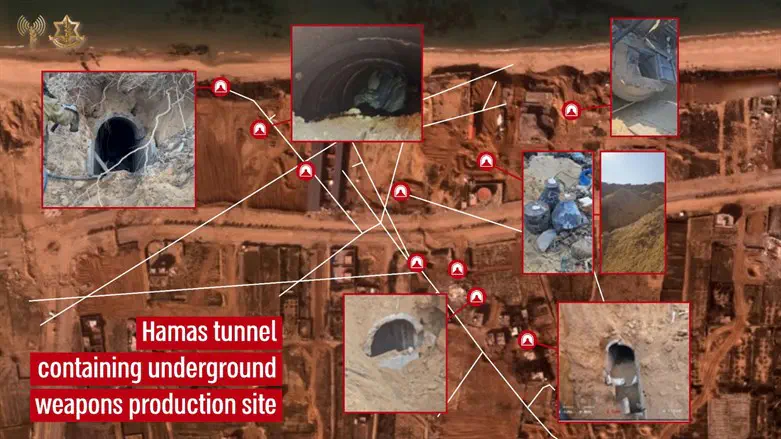
First, Trump’s original plan required tunnels, weapons-production facilities, and military infrastructure to be destroyed and weapons placed permanently beyond use. The July 2026 roadmap permits heavy weapons, depots, production sites, and tunnels to be decommissioned and stored under the Palestinian Arab-run National Committee for the Administration of Gaza. Personal weapons may be licensed under Palestinian Arab law. A destroyed arsenal cannot be recovered. A locally stored arsenal can.
That substitution is the heart of the problem. “Destroyed and not rebuilt" describes an irreversible result. “Decommissioned and stored" describes custody.
The roadmap even says the weapons may not be transferred to Israel or any non-Palestinian Arab party and that, at the end, only The National Committee for the Administration of Gaza (NCAG) may hold, store, or control weapons in Gaza. Hamas is therefore asked to relinquish possession to a Palestinian Arab successor system-not to eliminate the arsenal on which its return could depend.
Second, the roadmap places newly trained police into “existing police structures." It protects employee financial rights and gives failed police candidates civilian jobs or retirement. Ordinary doctors, teachers, and administrators should not be punished merely for having worked under Hamas. But preserving livelihoods is different from importing a Hamas-built police and patronage network. The public text supplies no adequate method for identifying dual roles, continuing loyalties, or concealed chains of command.
Third, Trump’s plan made Palestinian Arab statehood conditional on the PA reform program being faithfully carried out. The roadmap drops that condition. It requires no demonstrated recognition that Jewish sovereignty is legitimate and permanent, no repudiation of the eliminationist objective in Arabic, and no measurable reform of official education or religious incitement. Political rewards advance while ideological reform disappears.
Fourth, Palestinian Arab institutions will control weapons storage and internal security. International bodies may verify, monitor, and train, but the International Stabilization Force may not police Palestinian Arab society. The institutions most vulnerable to Hamas penetration will therefore enforce the rules against Hamas.
The roadmap does contain safeguards: an International Verification Committee, phased compliance, police vetting, and a prohibition on militia members joining the police. Their value depends on penetrating an organization that blurs civilian, political, police, and military functions. Yet the public text leaves the timetable and implementation mechanisms to be written after approval. It does not state how to identify a militia member, uncover an informal command chain, or prevent vetted officers from answering later to former superiors.
This is not disarmament. It is negotiated survival. For Hamas.
Distrust is not the obstacle. Dishonesty is.
Hamas and the broader Palestinian Arab leadership earned that distrust through repeated agreements that changed formal arrangements while leaving the instruments of war intact.
A credible settlement requires:
-destroyed weapons and tunnels,
-dismantled command networks,
-individual vetting,
-external control,
and
-completed reform before withdrawals, reconstruction money, or statehood advance.
Anything less leaves Hamas what it has preserved after earlier retreats: the ability to wait, rebuild, and return.
Hamas has already stated the principle: different tactics, different tools, different methods-same mentality and same mission. If a peace roadmap eliminates a name but preserves the underlying military machine, it fails to end the war-it simply finances the countdown to the next round of violence.
Principal Sources
President Trump’s original 20-point plan, annotated text,Associated Press:
full text of the July 2026 Gaza roadmap, Jerusalem Post:
Ghazi Hamad interview, August 2026,
Hamas Covenant of 1988 and 2017 principles, Wilson Center,
PLO Interim Program, 1974
Reuters: Hamas’s 40,000 employees and the 2014 unity government
Reuters: Hamas seeks incorporation of more than 40,000 personnel, January 2026
Reuters: Hamas-linked appointments and institutional entrenchment, February 2026
Reuters: Hamas dissolves its oversight body while ministries and staff remain, July 2026