

Archaeological excavations conducted over the past month at the site of the Great Synagogue of Vilna in Vilnius, Lithuania, have fully exposed the synagogue’s large central bimah (Torah-reading platform).
The excavations at the synagogue, associated with the Vilna Gaon and destroyed by the Nazi regime and later by the Soviet authorities some 70 years ago, also revealed sections of the main prayer hall and the women’s gallery, colourful floors, seating plaques bearing the names of worshippers, and a plaque engraved with the Ten Commandments.
Research and excavations at the synagogue and in the community compound that developed around it, known as the Shulhoyf, have been underway since 2011. This is the sixth excavation season, conducted by the Israel Antiquities Authority and the Kultūros paveldo išsaugojimo pajėgos, with funding from the Good Will Foundation and in cooperation with the Lithuanian Jewish (Litvak) Community, with the aim of preserving the remains of the synagogue, presenting them to the public, and developing the site for the benefit of the Jewish community in Lithuania and the general public.
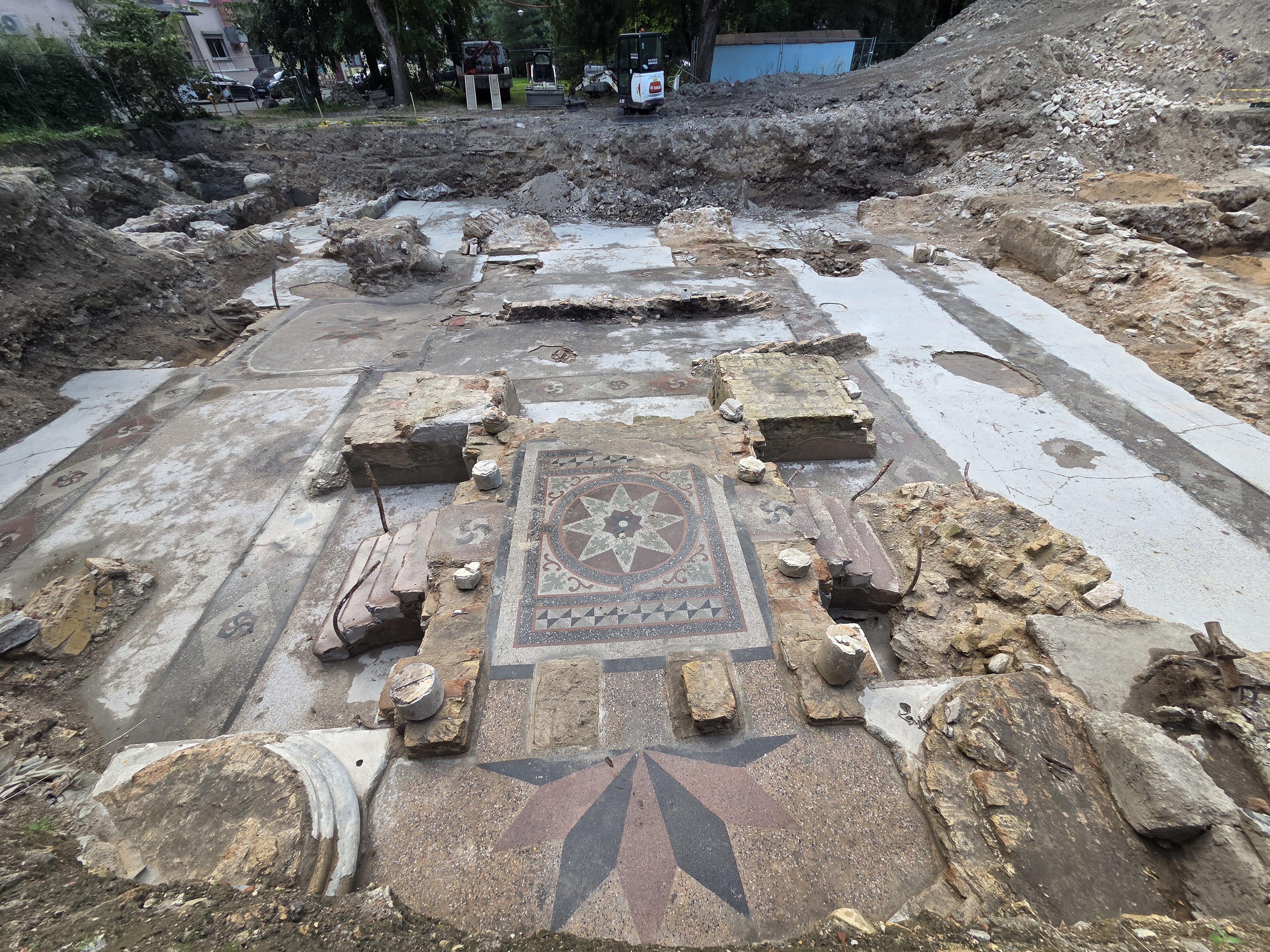
According to the excavation directors, Dr. Jon Seligman of the Israel Antiquities Authority and Justinas Račas of Kultūros paveldo išsaugojimo pajėgos, “The removal of the old school building that covered the historic synagogue enabled us, for the first time, to expose additional extensive and continuous sections at the heart of the building: the main prayer hall, paved with colourful terrazzo floors decorated with floral and geometric patterns; plaques bearing names; and many other finds that offer us a moving, almost personal encounter with the people who prayed here and with the community life that developed around the synagogue over the course of centuries."
A large number of plaques marking the permanent seats of worshippers in the synagogue were uncovered during the excavations. Some bore the names of women who prayed in the ezrat nashim, the women’s gallery; others bore the names of men. Additional plaques marked seats allocated to members of a major charitable society involved in the administration of the Jewish community of Vilna.
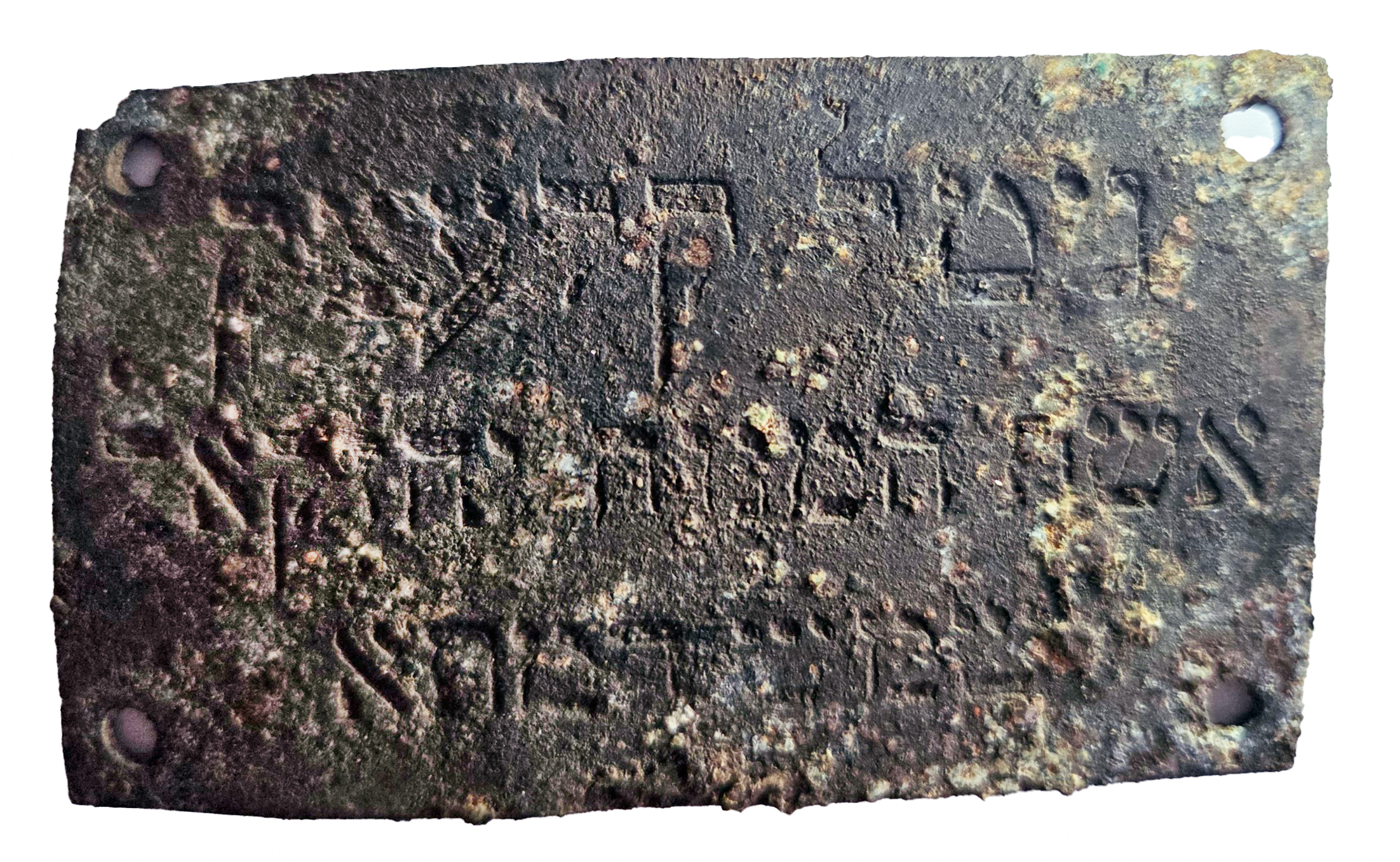
One of the prominent plaques marked a seat donated by “Gitel Klachek, wife of the late Yechezkel, Shamash d’Mata," that is, the city sexton. The Klachek family was a wealthy and influential family that owned numerous businesses in the streets surrounding the Great Synagogue of Vilna.
Yechezkel was apparently a public official who served the city’s Jewish community and handled practical matters, announcements, and errands on its behalf.
Among the additional finds uncovered in the excavation, attesting to the religious and communal life that took place in the synagogue over the years, was a small metal plaque engraved with the Ten Commandments.